
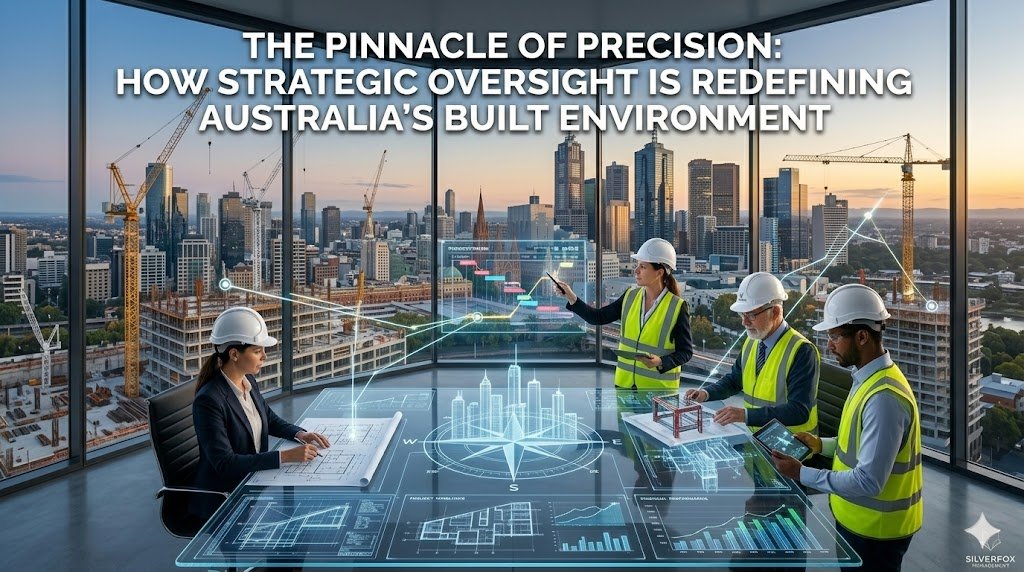
The Australian skyline is currently undergoing an unprecedented period of transformation. From the towering, mixed-use precincts reshaping the central business districts of Melbourne and Sydney to the sprawling, critical infrastructure networks connecting remote regional hubs in Western Australia and Queensland, the nation is building at a frantic pace. This construction boom is driven by rapid population growth, a transition toward sustainable energy, and massive public and private investments. However, as the scale and ambition of these projects increase, so too does their inherent complexity. Gone are the days when a simple set of blueprints and a general contractor were enough to guarantee a successful build.
Today, developing a major asset requires navigating a labyrinth of stringent regulatory frameworks, overcoming volatile supply chain disruptions, managing diverse multi-disciplinary teams, and adhering to rapidly evolving sustainability mandates. For developers, investors, and public stakeholders, the financial and reputational stakes have never been higher. To effectively mitigate risks and ensure that ambitious architectural visions translate into enduring, profitable realities, relying on specialized expertise is no longer optional—it is a fundamental necessity. This is precisely why elite construction project management in Australia has become the critical linchpin holding the modern built environment together. In this extensive guide, we will explore the multifaceted challenges facing the Australian construction sector and delve into how strategic professional oversight ensures the successful delivery of complex infrastructure.
The Evolution of the Australian Construction Landscape
To truly understand the value of expert consultancy, one must first recognize how drastically the Australian construction sector has evolved over the past two decades. The industry is no longer just about erecting buildings; it is about engineering integrated, future-proof ecosystems that serve the complex needs of modern communities.
The Rise of Integrated Urban Precincts
In major metropolitan centers, the focus has shifted away from isolated, single-use developments toward highly integrated, mixed-use urban precincts. Projects such as the ongoing renewal of Melbourne’s Fishermans Bend or the massive transit-oriented developments (TODs) across Sydney require an extraordinary level of coordination. These projects blend high-density residential living, premium commercial office spaces, retail hubs, and public amenities, all built directly atop or adjacent to complex subterranean public transport networks. Orchestrating the simultaneous construction of these diverse elements requires a master-level understanding of urban planning, civil engineering, and logistical sequencing.
Regional Expansion and Infrastructure Booms
Beyond the capital cities, Australia’s regional corridors are experiencing their own construction renaissance. Driven by decentralized population shifts and significant investments in the resource and renewable energy sectors, regional areas require robust infrastructure to support their growth. From state-of-the-art regional hospitals and educational facilities to massive solar farms and logistical freight hubs, these projects face unique geographical challenges. Transporting specialized materials across vast distances, housing a remote workforce, and dealing with extreme, unpredictable weather conditions demand a proactive and highly adaptable management approach.
Decoding the Complexities of the Modern Build
The journey from a conceptual architectural rendering to a completed, fully operational structure is fraught with potential pitfalls. Modern developments are intricate logistical puzzles involving hundreds of moving parts, any of which can derail a project if not managed with absolute precision.
Navigating the Multi-Stakeholder Matrix
A defining characteristic of modern infrastructure development is the sheer volume of stakeholders involved. A single high-rise project requires the seamless collaboration of architects, structural engineers, geotechnical specialists, acoustic consultants, traffic planners, and a vast army of specialized subcontractors. Furthermore, developers must manage relationships with external entities, including financial backers, insurance providers, local government councils, and the surrounding community. An expert consultancy firm acts as the central nervous system of this entire operation. They facilitate clear, transparent communication channels, ensuring that every discipline is perfectly aligned with the project’s master schedule and core objectives, thereby preventing costly interdisciplinary clashes.
Integrating Advanced Building Technologies
The technological sophistication of modern buildings has skyrocketed. We are now in the era of “smart buildings,” where structures are integrated with the Internet of Things (IoT), automated climate control systems, advanced security networks, and complex energy management software. Furthermore, the design and construction phases heavily utilize Building Information Modeling (BIM) and digital twin technologies. Overseeing the implementation of these digital ecosystems requires a management team that possesses not only traditional construction acumen but also deep technological literacy to ensure these complex systems are integrated flawlessly into the physical structure.
The Strategic Imperative of Risk Management and Financial Stewardship
In the high-stakes world of commercial construction, time is money, and the margins for error are razor-thin. Cost overruns and prolonged delays are the two most significant threats to a project’s viability.
Exhaustive Pre-Construction Feasibility
The foundation of a successful project is laid long before the first shovel hits the dirt. Comprehensive pre-construction planning is arguably the most vital phase of the development lifecycle. This involves rigorous feasibility studies, site-specific risk assessments, and deep value engineering. Value engineering is not merely about cutting costs; it is about maximizing the functional value of a project while minimizing unnecessary expenditures. By engaging premier construction project management in Australia during the earliest conceptual stages, developers can identify critical design flaws, logistical bottlenecks, and hidden site conditions (such as soil contamination or heritage overlays) before they manifest as devastating financial liabilities during the build.
Stringent Budgetary Control and Contract Administration
Once a project is underway, maintaining strict financial discipline is paramount. Expert consultants provide granular, real-time oversight of the project budget. This includes meticulous contract administration, managing the tendering process to ensure competitive pricing from reliable subcontractors, and rigorously assessing all variations and progress claims. By maintaining a hawk-eye view on the financials, strategic managers ensure that contingency funds are protected and that the project is delivered within the agreed-upon financial parameters, shielding investors from the volatility of the construction market.
Upholding Uncompromising Safety and Regulatory Standards
Australia operates under some of the most rigorous and comprehensive building codes and workplace safety regulations in the world. Navigating this dense regulatory environment is a monumental task that requires dedicated, specialized expertise.
Mastering the National Construction Code (NCC)
The Australian National Construction Code (NCC) dictates strict standards for structural integrity, fire resistance, accessibility, and energy efficiency. Compliance is absolute; failure to adhere to the NCC can result in severe legal penalties, forced rectifications, and massive delays. Expert oversight guarantees that every architectural drawing, every engineering calculation, and every physical installation on-site is fully compliant with the latest iterations of the NCC and all relevant Australian Standards (AS). They act as the vital bridge between the construction team and the independent building surveyors, streamlining the certification process.
Fostering a Culture of Occupational Health and Safety (OH&S)
Construction sites are inherently hazardous environments. The safety of the workforce and the general public is the ultimate, non-negotiable priority. Elite management consultancies do not simply tick boxes for OH&S compliance; they engineer comprehensive, site-specific safety frameworks. This involves conducting regular site audits, managing high-risk work methodologies (such as tower crane operations and deep basement excavations), and fostering a proactive safety culture among all contractors. By minimizing the risk of workplace incidents, expert oversight not only protects human lives but also prevents the severe legal and operational disruptions that follow a site accident.
Overcoming Supply Chain Volatility and Resource Scarcity
The global macroeconomic climate has introduced unprecedented challenges to the Australian construction industry. Developers are currently operating in an environment characterized by unpredictable supply chains and severe shortages of skilled labor.
Proactive Procurement Strategies
The days of “just-in-time” material delivery have been severely compromised by global shipping delays and geopolitical tensions. Procuring essential materials—from structural steel and specialized facade glazing to internal fixtures and mechanical components—now requires immense foresight. Expert managers mitigate these risks through aggressive, proactive procurement strategies. They leverage deep industry networks to source materials well in advance, identify high-quality domestic alternatives to mitigate reliance on international shipping, and dynamically adjust construction sequencing to ensure that workflow continues uninterrupted even if certain materials are delayed.
Navigating the Skilled Labor Shortage
Australia is currently facing a critical shortage of skilled tradespeople and seasoned construction professionals. This talent deficit threatens to slow down the national infrastructure pipeline. Partnering with a specialized management consultancy effectively solves this problem for developers. Instead of struggling to recruit and retain an in-house team of project directors, contract administrators, and site managers, developers can instantly tap into a pre-assembled team of elite professionals. Superior construction project management in Australia ensures that labor resources are optimized on-site, sequencing trades efficiently to maximize productivity and maintain project momentum despite broader industry shortages.
Pioneering Sustainability and Future-Proofing Assets
As global awareness of climate change intensifies, the construction industry—historically a major contributor to carbon emissions—is undergoing a massive paradigm shift. Sustainability is no longer a niche consideration; it is a primary driver of investment and development in Australia.
Achieving Premium Green Ratings
Modern commercial tenants and institutional investors demand environmentally responsible buildings. Achieving high-tier Green Star ratings from the Green Building Council of Australia (GBCA) and excellent NABERS (National Australian Built Environment Rating System) scores are essential for maximizing the long-term asset value of a development. Expert consultants guide projects through these rigorous certification processes. They oversee the implementation of sustainable design principles, including optimizing solar orientation, integrating high-efficiency HVAC systems, utilizing low-embodied-carbon materials (like engineered timber), and installing advanced water harvesting and recycling systems.
Embracing the Circular Economy
Forward-thinking oversight extends beyond simple energy efficiency to embrace the principles of the circular economy. This involves planning for a building’s entire lifecycle, ensuring that construction waste is minimized and diverted from landfills, and designing structures so that their components can be easily disassembled, repurposed, or recycled decades into the future. Navigating this sustainable transition requires specialized knowledge of emerging green technologies and innovative material sciences, ensuring the asset remains viable and compliant with future environmental legislation.
The Silverfox Management Advantage: Orchestrating the Skyline
Mastering the complexities of the Australian built environment requires an architectural backbone of steadfast oversight, rigorous discipline, and uncompromising expertise. At Silverfox Management Pty. Ltd., we understand that every development is a unique ecosystem with its own distinct challenges and opportunities.
Tailored Solutions for Complex Developments
Based in Victoria with the capacity to influence projects nationwide, our team of dedicated professionals specializes in providing high-level strategic consultancy. We reject the “one-size-fits-all” methodology. Whether you are developing a boutique commercial space, a high-density residential tower, or a sprawling regional infrastructure asset, we tailor our management frameworks specifically to your project’s distinct parameters. We integrate seamlessly with your existing stakeholders, acting as the vigilant guardians of your vision, your budget, and your timeline.
Transforming Vision into Reality
Our methodology is built on a foundation of radical transparency, proactive problem-solving, and a relentless dedication to engineering excellence. We anticipate bottlenecks before they occur, untangle complex regulatory webs, and enforce the highest standards of quality and safety at every stage of the build. By partnering with Silverfox Management, developers are free to focus on their overarching strategic goals, confident in the knowledge that the intricate, day-to-day execution of their project is in the hands of seasoned industry experts.
Conclusion
The physical fabric of Australia will continue to evolve, driven by bold architectural ambition and the pressing needs of a growing nation. However, the path from a visionary concept to a tangible, enduring landmark is more complex than ever before. It is a path fraught with financial risks, regulatory hurdles, and logistical monumental challenges that traditional building approaches simply cannot overcome.
To ensure the successful delivery of modern infrastructure, developers must embrace the strategic imperative of professional oversight. By engaging with industry-leading construction project management in Australia, stakeholders can safeguard their investments, enforce uncompromising standards of safety and quality, and successfully navigate the turbulent waters of the modern construction sector. At Silverfox Management, we are proud to serve as the strategic backbone for these ambitious endeavors, orchestrating the skyline and helping to build a resilient, innovative, and thriving future for Australia’s built environment.