
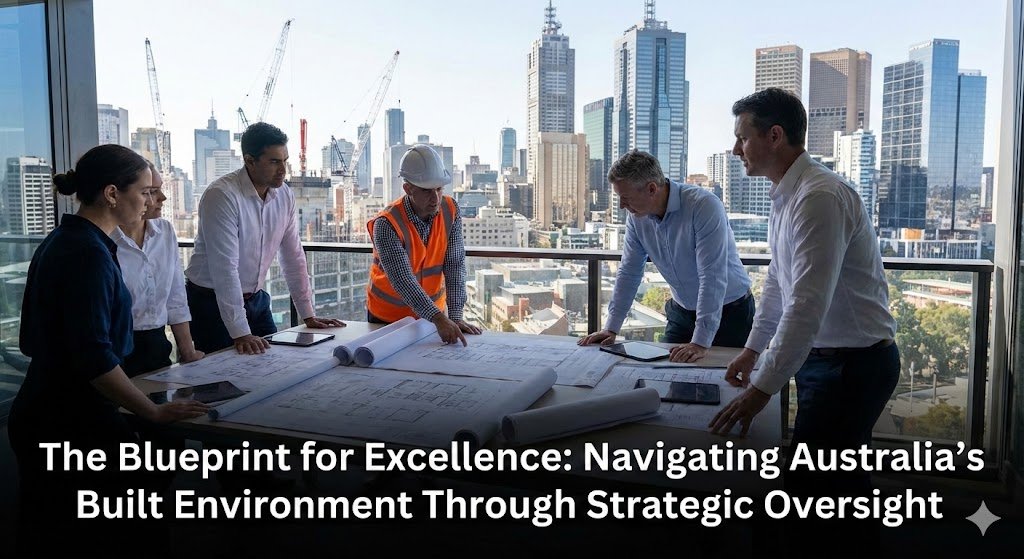
The Australian skyline is a testament to the nation’s unyielding ambition. From the shimmering glass towers of Melbourne’s Southbank to the sprawling infrastructure networks connecting the regional hubs of Western Sydney and Queensland, our built environment is in a constant state of metamorphosis. This physical evolution is not merely a collection of concrete, steel, and architectural vision; it is the backbone of our national economy and a reflection of our cultural identity. However, behind every successful skyscraper, bridge, and urban precinct lies a complex web of planning, regulation, and execution that requires a steady hand. In an industry defined by high stakes and intricate logistics, the difference between a landmark success and a costly failure often comes down to one critical factor: the presence of expert construction consultancy.
As we move further into a decade marked by rapid technological advancement and shifting economic tides, the role of professional management in construction has never been more pivotal. Stakeholders—ranging from government bodies to private developers—are facing unprecedented challenges. Supply chain volatilities, stringent environmental regulations, and the demand for smarter, more resilient cities are rewriting the rulebook. In this comprehensive exploration, we delve into the multifaceted world of Australian infrastructure and why strategic oversight is the cornerstone of modern development.
The Evolving Landscape of Australian Infrastructure
To understand the necessity of high-level management, one must first appreciate the scale of the canvas we are working on. Australia is currently experiencing an infrastructure boom that rivals any in its history. The federal and state governments have committed billions to road, rail, and renewable energy projects, while the private sector continues to push the envelope in residential and commercial developments.
This boom is not confined to the major capital cities. Regional Australia is undergoing a renaissance, driven by decentralized work models and a push for greater connectivity. Towns that were once sleepy outposts are transforming into vibrant economic hubs, requiring new schools, hospitals, and transport links. This geographical spread adds a layer of complexity to project delivery. Managing a high-rise build in the heart of the CBD presents a different set of challenges compared to a civil engineering project in a remote mining region.
In this dynamic environment, the “build it and they will come” philosophy is no longer sufficient. Projects must be meticulously planned to ensure they meet the immediate needs of the community while remaining adaptable for future generations. This requires a holistic approach that marries engineering precision with strategic foresight. It is here that expert construction consultancy proves its worth, bridging the gap between visionary concepts and on-the-ground reality. By analyzing market trends, assessing feasibility, and coordinating diverse teams, professional consultants ensure that the ambitious scope of Australian infrastructure is matched by rigorous execution.
Navigating the Labyrinth of Modern Challenges
The path from a blueprint to a ribbon-cutting ceremony is rarely a straight line. Today’s construction projects are navigating a labyrinth of challenges that can derail even the most well-funded ventures. One of the most pressing issues is the volatility of the global supply chain. Recent years have taught us that reliance on just-in-time delivery models can be a vulnerability. Materials shortages, fluctuating commodity prices, and logistics bottlenecks can cause cascading delays that inflate budgets and erode profit margins.
Furthermore, the regulatory landscape in Australia is becoming increasingly rigorous. The building codes, safety standards, and environmental compliance requirements are stringent, and rightly so. The memory of past structural failures and safety incidents has led to a “zero tolerance” approach to non-compliance. Navigating these regulations requires deep statutory knowledge and a proactive approach to quality assurance. A project manager cannot simply react to compliance issues as they arise; they must anticipate them, integrating regulatory milestones into the project timeline from day one.
Labor shortages also pose a significant hurdle. As the volume of work increases, the competition for skilled tradespeople, engineers, and site managers intensifies. This talent crunch places a premium on efficiency. Projects cannot afford downtime due to poor scheduling or miscommunication. Every hour of labor must be optimized.
In the face of these headwinds, the “business as usual” approach is a recipe for mediocrity or failure. Developers and asset owners need partners who can see around corners. They need a level of strategic guidance that goes beyond basic site supervision. This is the domain of expert construction consultancy, where seasoned professionals utilize data-driven insights and risk management frameworks to insulate projects from external shocks. By proactively identifying potential bottlenecks—whether they be regulatory, logistical, or financial—consultants allow stakeholders to make informed decisions rather than firefighting crises.
The Architecture of Risk Management
Risk is inherent in construction. The ground conditions might be different than the geotechnical report suggested; the weather might turn hostile; a key stakeholder might change the scope mid-project. The goal of professional management is not to eliminate risk entirely—which is impossible—but to manage and mitigate it effectively.
Effective risk management begins at the pre-construction phase. This is the “measure twice, cut once” philosophy applied to project governance. Comprehensive feasibility studies, rigorous cost planning, and detailed design reviews are essential. During this phase, experienced consultants will stress-test the project’s assumptions. Is the budget realistic given current inflation rates? Is the timeline achievable considering the site’s constraints? Are the contracts structured to protect the client’s interests?
Once construction commences, risk management shifts to active monitoring. This involves real-time tracking of progress against the critical path, strict financial controls, and continuous quality audits. It also involves “soft skills” like conflict resolution. Construction sites are melting pots of different trades and personalities. Disputes can arise over everything from site access to payment schedules. If left unresolved, these minor frictions can escalate into legal battles that stall progress.
A professional management team acts as the conductor of this orchestra, ensuring that every section comes in at the right time and in the right key. They maintain a single source of truth regarding project status, ensuring that the client is never in the dark. This transparency is vital for building trust and maintaining the confidence of investors and financiers. It is a level of governance that elevates a project from a chaotic scramble to a disciplined operation.
Sustainability: The New Standard of Excellence
Perhaps the most significant shift in the built environment sector is the imperative for sustainability. Green building is no longer a niche preference; it is a market expectation and, increasingly, a regulatory requirement. Australia’s commitment to net-zero targets is trickling down to the construction industry, influencing everything from material selection to waste management practices.
Modern projects are expected to minimize their carbon footprint, maximize energy efficiency, and contribute positively to their surrounding ecosystem. This involves complex decision-making. Should the structure utilize mass timber instead of concrete to reduce embodied carbon? How can the HVAC systems be optimized to lower operational costs? Can the site manage its own stormwater?
Implementing these sustainable solutions often requires navigating a higher upfront cost for a long-term payoff. It requires a sophisticated understanding of lifecycle costing—looking at the total cost of the asset over 30 or 50 years, rather than just the construction cost. This is where the strategic advice of a consultancy firm is invaluable. They can model different scenarios, demonstrating to clients how green investments will result in higher asset values, lower running costs, and better tenant retention.
Furthermore, sustainability extends to social responsibility. Projects are increasingly scrutinized for their impact on local communities. Does the development provide public amenities? Does it respect Indigenous cultural heritage? Is it accessible to people of all abilities? Navigating these social licenses to operate is as critical as pouring the concrete. It requires stakeholder engagement strategies that are empathetic, transparent, and consistent.
The Financial Imperative: Maximizing Value
Ultimately, construction is an economic activity. Whether it is a government building schools or a developer building apartments, the numbers have to stack up. In an era of shrinking margins and rising costs, financial discipline is non-negotiable.
Professional management brings a rigorous approach to cost control. This goes beyond simple bookkeeping. It involves value engineering—analyzing the design to find ways to achieve the same function and quality at a lower cost. It might involve suggesting alternative materials, modifying construction methodologies, or re-sequencing works to reduce preliminary costs.
It also involves strict contract administration. Variations—changes to the scope of work—are the nemesis of project budgets. Without firm management, variations can bleed a project dry. A strong consultancy team ensures that every variation is scrutinized, justified, and accurately priced before it is approved. They protect the client’s capital as if it were their own.
But value is not just about cutting costs; it is about maximizing quality and utility. A cheaply built building that requires constant maintenance is not good value. A well-managed project delivers an asset that is durable, functional, and desirable. This focus on quality assurance ensures that the finished product meets the highest standards, preserving its value for decades to come.
The Human Element: Leadership in the Built Environment
While we often focus on the technical and financial aspects of construction, it is the human element that drives success. The “Architecture of Success” is built on leadership. It requires individuals who can inspire teams, navigate politics, and remain calm under pressure.
The best project managers are not just technocrats; they are leaders. They foster a culture of safety and collaboration on site. They understand that a happy, safe workforce is a productive one. They build relationships with local councils, utility providers, and neighbors to smooth the path for delivery.
This leadership extends to the client relationship. For many clients, a major construction project is a once-in-a-lifetime undertaking. It can be stressful and overwhelming. A professional consultant acts as a trusted advisor, guiding the client through the jargon and the complexity. They provide reassurance when things get tough and celebrate the milestones when things go right.
Conclusion: The Future is Managed
As we look toward the horizon, the future of Australia’s built environment is bright, but it is also demanding. The projects of tomorrow will be smarter, greener, and more integrated than ever before. They will require a fusion of traditional construction skills and modern digital technologies. They will need to withstand the impacts of climate change and the pressures of population growth.
In this complex ecosystem, the role of the amateur or the generalist is diminishing. The stakes are simply too high. The future belongs to those who value precision, foresight, and discipline. It belongs to projects that are underpinned by robust governance and strategic planning.
For stakeholders looking to leave their mark on the Australian skyline, the message is clear: success is not an accident. It is designed, planned, and managed. By engaging expert construction consultancy, developers and government bodies ensure that their vision is not lost in translation. They ensure that their capital is deployed efficiently, their risks are managed effectively, and their projects stand the test of time.
From the heritage-laden streets of our inner cities to the vast horizons of our regional frontiers, the story of Australia’s growth is being written one project at a time. Ensuring that this story is one of resilience, innovation, and success requires more than just bricks and mortar—it requires the guiding hand of expertise. As the industry evolves, those who recognize the strategic imperative of professional oversight will be the ones who define the future of our built environment.