
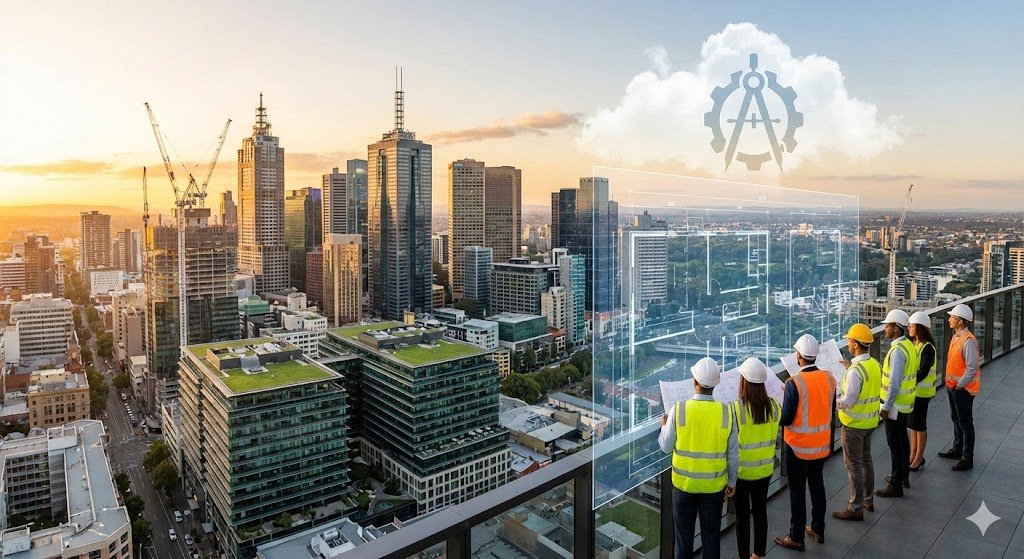
The Australian skyline is a dynamic narrative, constantly being rewritten by steel, glass, and the unyielding ambition of a nation on the move. From the heritage-laden streets of Melbourne’s inner suburbs to the burgeoning growth corridors of Western Sydney and the resource-rich hubs of Western Australia, the physical fabric of our country is undergoing a metamorphosis. However, the path from a visionary architectural rendering to a tangible, functioning structure is rarely a straight line. It is a complex journey fraught with regulatory hurdles, supply chain volatilities, and economic pressures.
In this high-stakes environment, the difference between a project that defines a skyline and one that becomes a cautionary tale often lies in the quality of its leadership. As we navigate the complexities of the modern built environment, the industry is increasingly turning toward a more disciplined, insightful approach. This shift isn’t just about managing schedules; it is about embracing strategic construction management as the foundational pillar of project success.
Navigating the Australian Built Environment
To understand the necessity of expert consultancy, one must first appreciate the unique texture of the Australian construction landscape. Unlike many other markets, Australia presents a distinct set of challenges and opportunities. We are a nation of vast geography but highly concentrated urban centers. This duality creates a logistical paradox where high-density inner-city developments occur simultaneously with sprawling regional infrastructure projects.
The Regulatory Labyrinth
Australia boasts some of the most stringent building standards in the world. The National Construction Code (NCC) is a living document, evolving to address safety, sustainability, and accessibility. For developers and investors, keeping pace with these changes is not merely a compliance exercise but a risk management necessity. Whether it is navigating the planning permissions in Victoria or adhering to environmental protection statutes in Queensland, the regulatory landscape is a minefield for the unprepared.
Expert oversight serves as the compass through this labyrinth. It ensures that compliance is baked into the project lifecycle from the feasibility stage, rather than being bolted on as a costly remedial measure during construction. This proactive adherence to standards protects stakeholders from legal exposure and ensures the longevity of the asset.
The Supply Chain Challenge
The post-pandemic era has exposed the fragility of global supply chains. Australia, being an island nation, is particularly vulnerable to disruptions in the flow of materials. Steel, timber, and specialized glazing have all seen volatile price fluctuations and delivery delays.
In this climate, traditional project management—often reactive and linear—is insufficient. A robust approach requires foresight and agility. It demands a deep understanding of procurement strategies that can absorb shocks without derailing the critical path. This is where the value of high-level consultancy becomes undeniable, transforming procurement from a logistical task into a strategic asset.
The Blueprint for Resilience
Resilience is a term often bandied about in corporate boardrooms, but in construction, it is measurable. It is the ability of a project to withstand external pressures—be they economic downturns, labor shortages, or severe weather events—and still deliver on its core objectives.
Building resilience starts with the recognition that a construction project is not a static entity but a complex adaptive system. Every decision made in the design phase ripples through to procurement, construction, and eventual facility management.
Mitigating Risk Through Expertise
Risk is inherent in construction. Ground conditions may be worse than anticipated; subcontractors may go insolvent; design discrepancies may arise on site. The goal is not to eliminate risk entirely, which is impossible, but to mitigate and manage it.
This is where strategic construction management proves its worth. By conducting rigorous risk assessments early in the project lifecycle, expert consultants can identify potential bottlenecks before they become blockages. This might involve stress-testing the budget against inflation scenarios or auditing the capacity of key trade partners. It is a process of “looking around corners,” ensuring that the project team is never blindsided by the foreseeable.
The Economic Equation
There is a pervasive myth that engaging top-tier construction consultancy is an added expense. In reality, it is a savings mechanism. The cost of a delayed project, with its compounding interest payments and lost revenue, far outweighs the fees of expert oversight.
Consider the economics of a major commercial development. A delay of just one month can cost millions in holding costs and deferred rental income. By streamlining the construction program, optimizing value engineering, and preventing rework, professional management acts as a shield for the project’s bottom line. It ensures that capital is deployed efficiently, maximizing the Return on Investment (ROI) for developers and asset owners.
The Evolution of the “Super-Project”
Australia is currently in the age of the “megaproject.” Governments at state and federal levels are pouring billions into infrastructure—rail loops, tunnels, airport upgrades, and renewable energy hubs. Simultaneously, the private sector is pushing the boundaries with mixed-use precincts that combine residential, commercial, and retail spaces into integrated vertical villages.
These super-projects require a level of orchestration that transcends traditional building practices. They involve multiple stakeholders, including government bodies, community groups, utility providers, and private investors. Managing these competing interests requires diplomacy as much as engineering prowess.
Stakeholder Management and Communication
A frequent point of failure in large-scale projects is the breakdown of communication. When architects, engineers, builders, and clients operate in silos, information is lost, and errors proliferate.
Professional consultancy acts as the central nervous system of the project. It ensures that the vision of the client is accurately translated to the design team and that the technical constraints of the builder are understood by the architects. This alignment is crucial. It fosters a collaborative culture where problems are solved collectively rather than blamed individually.
Furthermore, in an era where social license to operate is critical, managing community expectations is vital. Whether it’s mitigating noise pollution in a dense urban environment or ensuring local job creation in a regional hub, the modern project manager must wear many hats.
Sustainability: The New Non-Negotiable
The Australian property sector is moving rapidly towards decarbonization. With the Green Building Council of Australia setting ambitious targets and global capital increasingly favoring ESG-compliant assets, sustainability is no longer a “nice-to-have”—it is a commercial imperative.
However, delivering a 6-Star Green Star building is technically demanding. It involves complex decisions regarding embodied carbon, energy efficiency, water retention, and material selection.
Bridging the Gap Between Vision and Reality
Architects may design a green building, but it takes a rigorous management process to build one. Substituting a specified sustainable material for a cheaper, non-compliant alternative during the tender process can undermine the entire sustainability rating of the project.
Expert oversight ensures the integrity of the green design is maintained throughout the build. It involves strict quality assurance protocols to verify that what is installed matches what was specified. This vigilance is essential not just for the environment, but for the asset’s value. In the current market, “brown” buildings (those with poor environmental performance) are trading at a discount, while high-performing green assets command a premium. This creates a compelling financial argument for integrating strategic construction management focused on sustainability outcomes.
The Digital Transformation of Construction
The construction industry has historically been slow to adopt technology, but that is changing. The digitization of the built environment is offering new tools to enhance efficiency and transparency. Building Information Modeling (BIM), digital twins, and drone surveying are revolutionizing how we plan and execute projects.
Data-Driven Decision Making
In the past, many construction decisions were based on gut feeling or historical precedent. Today, we have data. We can model the energy performance of a building before the foundation is poured. We can simulate construction sequences to identify safety clashes. We can track the real-time movement of materials on site.
However, technology is only as good as the hands that wield it. It requires sophisticated management to integrate these digital tools into the workflow effectively. It’s not about using tech for tech’s sake; it’s about leveraging data to make smarter, faster decisions. A consultancy that is fluent in these digital languages can provide clients with a level of visibility and control that was previously unimaginable.
Why “Going it Alone” is a Failed Strategy
In an attempt to cut costs, some developers or asset owners attempt to manage projects in-house or rely solely on a general contractor without independent oversight. While this may seem fiscally prudent on a spreadsheet, it creates a dangerous conflict of interest.
The builder’s primary incentive is to maximize their margin, often by finding the quickest or cheapest route to completion. The client’s incentive is quality, longevity, and adherence to the vision. Without an independent representative to bridge this gap, the client’s interests often take a backseat.
The Role of the Superintendent
An independent project manager or superintendent acts as the client’s eyes and ears. They interpret the technical jargon, validate payment claims, and ensure that variations are legitimate. They hold the builder accountable to the contract, ensuring that the finished product meets the agreed standards.
This relationship is not adversarial; it is professional. Good builders appreciate a competent project manager because it means decisions are made quickly, information is clear, and the job runs smoothly. It creates a professional ecosystem where excellence is the standard, not the exception.
The Future of Australia’s Built Environment
As we look toward 2030 and beyond, the Australian construction industry faces a horizon filled with both promise and complexity. The population is growing, urbanization is intensifying, and the need for resilient infrastructure is greater than ever.
We are seeing a shift towards modular and prefabricated construction to speed up delivery and reduce waste. We are seeing the retrofitting of existing assets becoming a major market as we seek to recycle our built environment rather than demolish it. We are seeing a greater emphasis on “wellness” in design, creating spaces that support the physical and mental health of occupants.
To capitalize on these trends, the industry must move away from the adversarial, race-to-the-bottom mentality of the past. It must embrace a collaborative model where value is defined by whole-of-life outcomes, not just initial construction costs.
Conclusion: The Strategic Imperative
The Australian skyline is more than just a collection of structures; it is a testament to our economic vitality and cultural ambition. Every crane on the horizon represents a belief in the future. But belief alone does not build bridges, nor does it erect skyscrapers.
Success in the modern built environment requires a synthesis of vision and execution. It demands a rigorous adherence to quality, a proactive approach to risk, and a deep understanding of the regulatory and economic forces at play. It requires a partner who can navigate the complexities of the supply chain, champion the cause of sustainability, and lead diverse teams toward a singular goal.
For developers, government bodies, and investors, the message is clear: the complexity of the modern project demands a sophisticated response. It demands strategic construction management. By investing in expert oversight, we are not just building structures; we are building a legacy of resilience, efficiency, and excellence that will define the Australian landscape for generations to come.
The path from blueprint to reality is challenging, but with the right expertise guiding the way, the possibilities are as limitless as the skyline itself.