
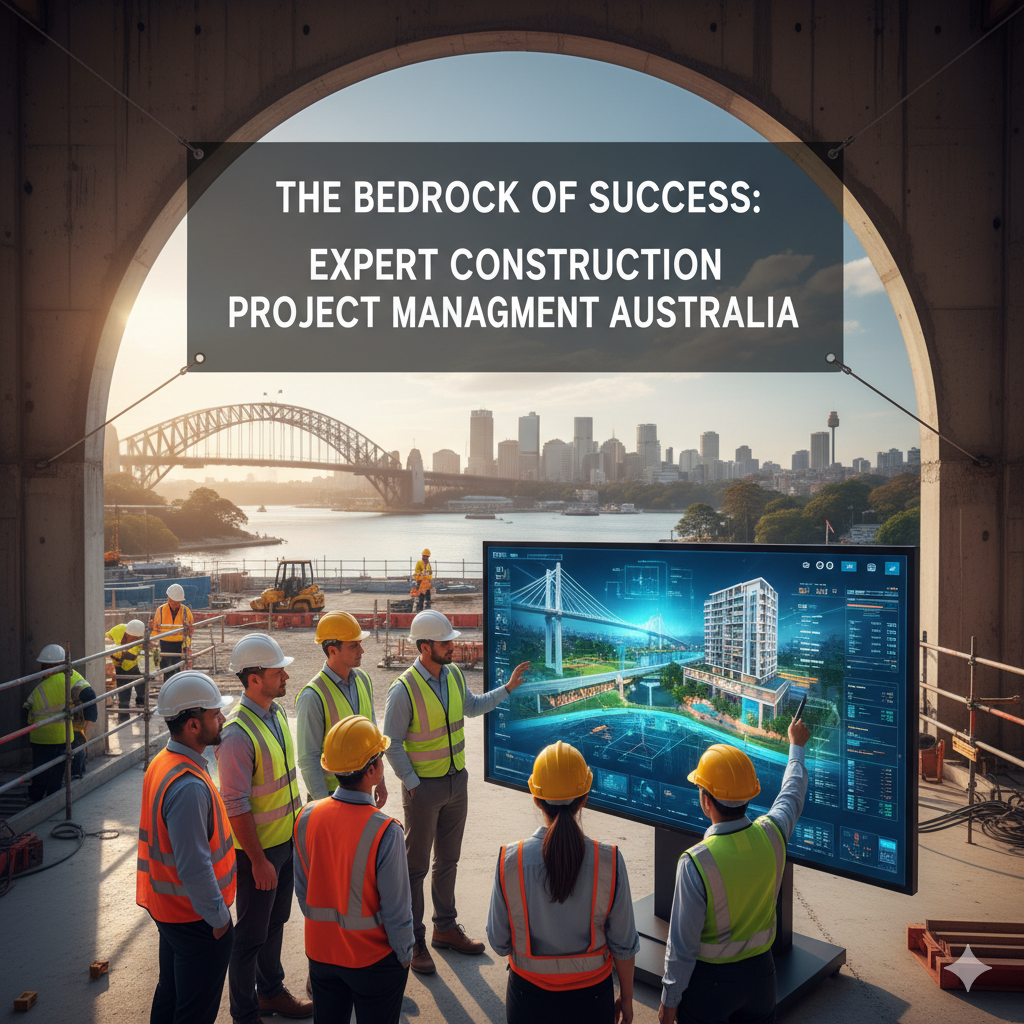
Australia’s skyline is in a constant state of transformation. From the soaring residential towers reshaping Melbourne’s profile to the critical infrastructure projects connecting regional hubs, the nation is in a perpetual state of building. These structures are tangible symbols of ambition, economic growth, and community development. But behind every gleaming façade, every sturdy bridge, and every successful build lies an invisible, yet indispensable, framework: expert construction project management.
In today’s fast-paced and high-stakes building sector, the difference between a landmark success and a costly failure is no longer just about high-quality materials or visionary design. It is about the meticulous, strategic, and predictive orchestration of every complex component. This is the domain of construction project management—a specialized discipline that has evolved from a simple coordination role into the single most critical driver of project success in Australia.
This post explores the depth and breadth of this essential field. We will deconstruct the modern Australian construction landscape, define the core pillars of elite project management, and demonstrate why engaging expert construction project management is not merely an option, but a foundational necessity for survival and success.
Deconstructing the Modern Australian Construction Landscape
To appreciate the role of project management, one must first understand the battlefield. The Australian construction industry is a complex, high-pressure ecosystem defined by a unique set of challenges and opportunities.
The Headwinds: Navigating Unprecedented Challenges
The past few years have tested the resilience of the industry. Firms are currently navigating a convergence of pressures:
- Intense Regulatory Demands: Australia maintains some of the world’s most stringent building codes, safety regulations (WHS/OH&S), and environmental standards. Navigating the approvals process through local councils and state bodies is a labyrinthine task that demands specialized knowledge.
- Cost Volatility and Supply Chain Disruption: The global supply chain remains fragile. Fluctuating costs for steel, timber, and concrete, coupled with unpredictable delivery timelines, can shatter budgets and derail schedules that aren’t managed with proactive, agile strategies.
- Skilled Labour Shortages: The competition for skilled trades—from engineers and surveyors to electricians and welders—is fierce. Securing and managing quality labour requires robust networks and strategic resource planning.
- Rising Stakeholder Expectations: Modern projects are no longer built in a vacuum. Investors demand transparent and predictable returns, end-users expect higher standards of quality and finish, and communities require minimal disruption.
The Tailwinds: A Future of Opportunity
Despite these hurdles, the future is bright, driven by significant investment and technological shifts.
- Infrastructure Boom: Massive public and private spending on transport, renewable energy, and public amenities continues to fuel the sector.
- The Sustainability Mandate: The push for ‘Green Star’ ratings and net-zero buildings is no longer a trend but a core market demand. This requires a new level of expertise in sustainable materials, energy-efficient systems, and waste reduction.
- Technological Adoption: Digital transformation is finally taking hold. Building Information Modeling (BIM), data analytics, drone-based surveying, and project management software are moving from the fringe to the mainstream, offering new ways to improve efficiency and reduce errors.
In this environment of high risk and high reward, “muddling through” is a recipe for disaster. This complexity is precisely why expert construction project management has become the central nervous system of any successful project, guiding it from a simple vision to a tangible reality.
The Core Pillars of Expert Construction Project Management
What does elite-level construction project management actually involve? It is a holistic discipline that covers the entire project lifecycle, resting on four unshakeable pillars.
Pillar 1: Strategic Vision and Meticulous Feasibility
Before a single shovel hits the ground, the most important work is done. An expert project manager interrogates the “why” and “how” of a project. This phase moves beyond initial sketches and optimistic budgets to establish a realistic foundation for success.
This involves:
- Comprehensive Site Analysis: Understanding the geotechnical, environmental, and logistical constraints of the proposed site.
- In-Depth Risk Assessment: Identifying potential pitfalls—from council delays and community objections to unforeseen site conditions—and developing proactive mitigation strategies.
- Detailed Financial Modelling: Working with quantity surveyors to build a budget that is not just competitive, but realistic and defensible against market volatility.
- Design Management: Collaborating with architects and engineers to ensure the design is not only aesthetically pleasing but also buildable, compliant, and cost-effective.
This initial strategic phase is where projects are truly set up for success. It prevents the catastrophic budget blowouts and design flaws that emerge when this critical homework is skipped.
Pillar 2: Rigorous Procurement and Cost Control
With a solid plan in place, the focus shifts to procurement. In the Australian market, this is a strategic minefield. A project manager’s role here is to protect the client’s interests, time, and budget.
This is achieved through:
- Strategic Sourcing: Leveraging established networks and market intelligence to source materials and subcontractors that offer the best possible value, not just the lowest price.
- Transparent Tendering: Managing the tender process with precision and fairness, ensuring all bids are compared on a true like-for-like basis.
- Iron-Clad Contract Negotiation: Expertly negotiating contracts (e.g., AS 4000, AS 4902) that clearly define scope, responsibilities, and liabilities, thereby protecting the client from costly disputes and scope creep.
During the build, this pillar extends to relentless cost control. Every variation request, every invoice, and every progress claim is scrutinized to ensure the project remains aligned with the approved budget.
Pillar 3: Flawless Execution and On-Site Leadership
This is the most visible phase of management: the build itself. Here, the project manager acts as the client’s representative and the on-site leader, ensuring the vision is executed to specification.
Key responsibilities include:
- Master Scheduling: Developing and maintaining the master program (often using Gantt charts or critical path methodology) to coordinate hundreds, sometimes thousands, of individual tasks and dependencies.
- Quality Assurance: Implementing rigorous QA processes to ensure the work being done meets all contractual specifications, building codes, and quality standards. This is about preventing defects, not just finding them later.
- WHS/OH&S Compliance: Championing a culture of safety on-site, ensuring all work practices comply with Australia’s stringent safety laws to protect workers and mitigate liability.
This “boots-on-the-ground” presence is what keeps the project moving forward, resolving conflicts, solving problems in real-time, and holding all parties accountable.
Pillar 4: Seamless Stakeholder and Approvals Management
A construction project does not exist in isolation. It impacts investors, tenants, governing bodies, and the surrounding community. A key, and often underestimated, role of the project manager is to act as the central communication hub.
This involves:
- Navigating Authorities: Acting as the primary liaison with local councils and utility providers to ensure all permits are secured, inspections are passed, and approvals are granted without delay.
- Transparent Reporting: Providing clients and key investors with clear, regular, and honest progress reports. This builds trust and ensures decision-makers are never surprised.
- Community Liaison: Proactively managing communication with neighbours and community groups to address concerns and minimize disruption, protecting the project’s (and client’s) public reputation.
When these four pillars are managed by a cohesive, experienced team, the result is a project that flows, a budget that holds, and a final asset that delivers maximum value.
The Tangible Dividends: How Professional Management Delivers Real ROI
It can be tempting for a developer to view project management as a discretionary cost. This is a critical error in judgment. In reality, expert construction project management is a high-yield investment that pays for itself multiple times over.
Mitigating Risk, Maximizing Certainty
The primary value proposition of a project manager is the mitigation of risk. Construction is an industry defined by variables: unexpected weather, hidden services underground, subcontractor insolvency, global pandemics.
An expert manager doesn’t just react to these problems; they anticipate them. Through rigorous planning, contractual protections, and contingency strategies, they build a buffer around the project. This “shock absorber” effect provides the client with the single most valuable commodity in development: certainty. It turns a chaotic, unpredictable process into a controlled, predictable one.
Championing Quality and Long-Term Value
A poorly managed project cuts corners. A professionally managed project understands that true value lies in the long-term performance of the asset. By enforcing strict quality assurance, a project manager ensures the build is not plagued by defects that will emerge years later, leading to costly litigation and reputational ruin.
Furthermore, they are the client’s guide in navigating complex sustainability goals. They have the expertise to integrate Green Star principles, source sustainable materials, and manage waste effectively, delivering a final product that is not only environmentally responsible but also more desirable and profitable in the modern Australian market.
Protecting the Bottom Line: On Time and On Budget
The data is clear: projects managed by independent, expert teams have a significantly higher rate of success in meeting their original time and budget targets.
The cost of a single month’s delay on a major commercial project—factoring in holding costs, lost rent, and contractual penalties—can dwarf the entire fee for a project management consultant. By identifying and resolving bottlenecks before they halt progress, a project manager’s value is directly reflected on the bottom line. They are the guardians of the client’s financial interests from concept to completion.
Technology as the Enabler: The Future of Construction Management
The image of a project manager with a clipboard and a rolled-up blueprint is long gone. Today, leading Australian construction consultancies are technology-driven firms.
- Building Information Modeling (BIM): This is perhaps the most significant advancement. BIM allows teams to build the entire project digitally before building it physically. This 5D model (3D design + time + cost) allows managers to identify design clashes, plan logistics, and model costs with incredible accuracy.
- Data Analytics: Modern managers use data to drive decisions. By analyzing data from past projects, they can predict potential bottlenecks, forecast costs more accurately, and identify areas for efficiency gains.
- Cloud-Based Collaboration: Project management platforms ensure that the client, architect, engineers, and contractors are all working from a “single source of truth.” This eliminates miscommunication, streamlines approvals, and creates a transparent, auditable record of the entire project.
This technology doesn’t replace the need for human expertise. It amplifies it. It provides the expert construction project management team with the powerful tools they need to manage the increasing complexity of modern builds.
Building Australia’s Future, One Project at a Time
The Australian construction sector is the engine of the national economy and the artist of its identity. The projects we build today will define how we live, work, and connect for decades to come.
In this high-stakes environment, the quality of a project is a direct reflection of the quality of its management. The complexity of design, the challenges of the market, and the expectations of stakeholders have all converged to make one thing abundantly clear: success is not an accident.
It is the direct result of strategic foresight, meticulous planning, rigorous control, and on-site leadership. It is the result of expert construction project management. For any developer, investor, or organisation looking to build in Australia, engaging this expertise is the first and most important decision you will make. It is the true bedrock of every successful project.