
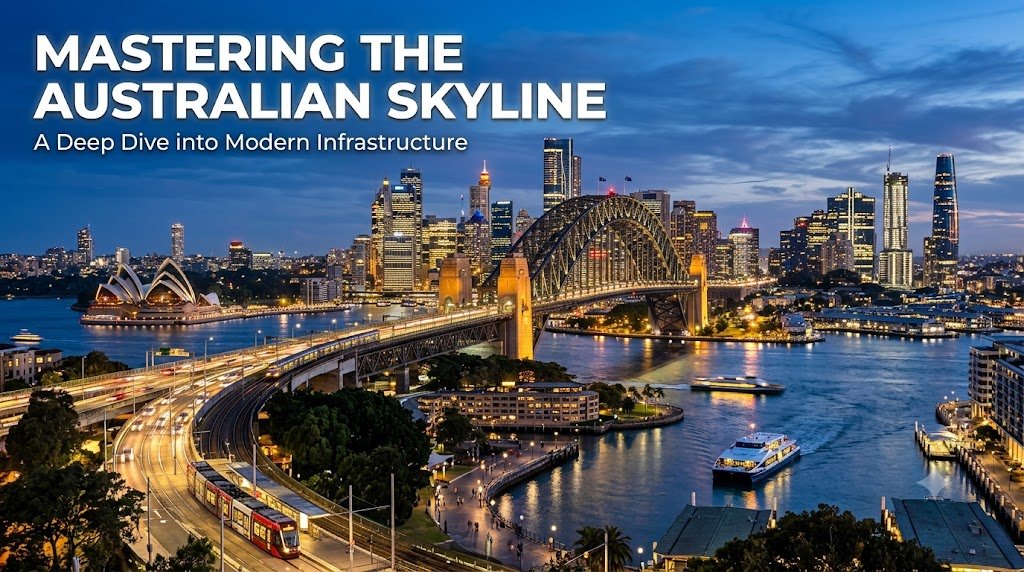
The Australian skyline is a vibrant, ever-evolving testament to the nation’s economic ambition, cultural evolution, and engineering prowess. From the heritage-laden streets of Melbourne’s inner suburbs to the burgeoning growth corridors reshaping regional Victoria, New South Wales, and beyond, the physical fabric of the country is in a state of rapid metamorphosis. However, this physical evolution brings with it an unprecedented array of complexities. Managing commercial, residential, and industrial infrastructure projects in this fast-paced climate requires more than just financial capital and visionary architecture. It demands an intricate understanding of local markets, a highly strategic approach to resource allocation, and a commitment to unwavering quality control from the moment a project is conceived until the final handover.
In this comprehensive guide, we will explore the multifaceted nature of Australia’s construction and infrastructure sector. We will dissect the primary challenges developers, investors, and project managers face in the current economic climate and outline the structural strategies required to overcome these hurdles. Navigating this complex landscape successfully demands a sophisticated, professional approach that can accurately anticipate risks, streamline execution, and ensure that every milestone is met with precision. For developers looking to leave a lasting legacy on the Australian built environment, understanding these fundamental pillars is the first step toward enduring success.
The Evolution of the Australian Built Environment
To fully appreciate the current state of the Australian construction sector, one must look at the historical context that has shaped modern development. Decades ago, urban centers were heavily localized, with clear delineations between commercial business districts and residential suburbs. Today, the lines have blurred. Mixed-use developments, towering residential skyscrapers, and integrated transit hubs are now the norm, driven by rapid population growth and the critical need for urban densification.
This evolution has been significantly fueled by government-backed infrastructure mega-projects designed to connect regional hubs with major metropolitan areas. Initiatives such as inland rail networks, major highway expansions, and metropolitan tunnel projects have reshaped not only the physical landscape but also the economic opportunities within these regions. As cities expand outwards into previously undeveloped territories, developers are tasked with building entirely new communities from the ground up, integrating essential services, retail spaces, and sustainable living environments into their master plans. This scale of development requires an architectural backbone that is both resilient and adaptable to future demographic shifts.
Economic Drivers Fueling Infrastructure Growth
The backbone of this nationwide construction boom is a robust combination of public and private sector investment. In recent years, Australia has seen unprecedented levels of funding directed toward civil infrastructure, healthcare facilities, educational institutions, and renewable energy projects. State and federal governments recognize that investing in the built environment is a proven catalyst for job creation and long-term economic stability.
However, this influx of capital has also increased market competition. Developers are under immense pressure to deliver projects on time and within budget, all while navigating an environment characterized by fluctuating interest rates and tightened lending criteria. In this highly competitive arena, the margin for error is razor-thin. A project that suffers from delays or budget blowouts can quickly become a financial liability rather than a lucrative asset. Therefore, a strategic edge is essential. Investors and stakeholders are increasingly demanding meticulous financial planning, transparent reporting, and rigorous risk management protocols to protect their investments and maximize their returns.
Navigating Regulatory Frameworks and Compliance
One of the most formidable challenges in the Australian construction industry is navigating the labyrinth of regulatory frameworks. The National Construction Code (NCC) sets stringent minimum standards for safety, health, amenity, and sustainability in the design and construction of new buildings. Additionally, developers must comply with a complex web of local council zoning laws, environmental protection regulations, and heritage conservation overlays.
SilverFox Management
Failure to adhere to these strict regulations can result in severe consequences, ranging from costly project delays and hefty financial penalties to reputational damage and legal disputes. Navigating these legal requirements requires a proactive approach. It involves engaging with local authorities early in the planning phase, conducting thorough environmental impact assessments, and ensuring that all architectural designs meet or exceed the statutory requirements. This regulatory landscape is constantly shifting, with regular updates to building codes reflecting new safety standards and environmental priorities. Staying abreast of these changes is a full-time endeavor that requires dedicated expertise.
The Crucial Role of Strategic Risk Mitigation
Risk is an inherent component of any large-scale construction project. From unforeseen geotechnical issues discovered during excavation to sudden changes in government policy, the variables are endless. Effective risk management is not about eliminating risk entirely—which is an impossible feat—but rather about identifying potential vulnerabilities early, quantifying their potential impact, and developing robust contingency plans to mitigate them.
SilverFox Management
This is precisely where expert construction project management becomes an invaluable asset to any development team. By placing seasoned professionals at the helm of a project, developers can benefit from a bird’s-eye view of the entire operation. These specialists conduct rigorous risk assessments, evaluate the viability of construction methodologies, and implement stringent safety protocols that protect both the workforce and the financial bottom line. Through proactive problem-solving, potential roadblocks are identified and neutralized before they have the opportunity to escalate into critical project failures, ensuring a smoother transition through every phase of development.
Managing Supply Chain Logistics and Material Costs
The global supply chain disruptions of recent years have had a profound impact on the Australian built environment. The industry has grappled with severe shortages of essential building materials, including structural timber, steel, cement, and specialized electrical components. Consequently, material costs have skyrocketed, severely impacting project budgets and feasibility calculations.
To navigate this volatile landscape, modern project management requires an agile and highly strategic approach to procurement. Developers can no longer rely on just-in-time delivery models; instead, they must forward-order critical materials, diversify their supplier networks, and negotiate flexible contracts that can accommodate market fluctuations. Furthermore, advanced logistical planning is necessary to ensure that materials are stored safely and efficiently on-site, minimizing the risk of damage or theft. This level of meticulous supply chain management is essential for keeping projects on schedule and protecting profit margins against unpredictable global economic forces.
Championing Sustainable Building Practices
Sustainability is no longer a niche concept or an optional add-on in the Australian construction sector; it is a fundamental imperative. With a growing awareness of climate change and environmental degradation, there is an industry-wide push towards carbon-neutral construction, energy-efficient building designs, and the integration of renewable energy systems.
SilverFox Management
Developers are increasingly targeting high ratings from recognized environmental certification bodies, such as the Green Star rating system and NABERS (National Australian Built Environment Rating System). Achieving these prestigious certifications requires a holistic approach to sustainability, encompassing everything from the initial sourcing of eco-friendly, low-emission building materials to the implementation of smart building technologies that optimize energy consumption, water usage, and waste management once the building is operational.
Driving Environmental Excellence Through Leadership
Transitioning to sustainable building practices often introduces new complexities into the design and construction phases. Sourcing innovative green materials, integrating complex HVAC systems, and ensuring compliance with stringent environmental standards require a specialized skill set.
Integrating expert construction project management into the project team ensures that sustainability goals are not compromised during the value engineering process. Professional managers work closely with architects, engineers, and specialized environmental consultants to ensure that eco-friendly initiatives are seamlessly woven into the project’s DNA from day one. They monitor the implementation of these green technologies on the ground, verifying that construction teams adhere to the agreed-upon environmental management plans. This diligent oversight not only helps secure highly sought-after environmental certifications but also significantly enhances the long-term asset value and marketability of the completed development.
The Technological Revolution in Project Delivery
The construction industry, historically known for its slow adoption of new technologies, is currently undergoing a massive digital transformation. Building Information Modeling (BIM) has revolutionized the way projects are designed, visualized, and executed. By creating highly detailed, multi-dimensional digital representations of a building’s physical and functional characteristics, BIM allows stakeholders to detect spatial clashes and resolve design conflicts in the virtual realm before a single shovel hits the dirt.
SilverFox Management
Beyond BIM, the integration of artificial intelligence (AI), machine learning, and drone technology is reshaping on-site operations. Drones provide real-time aerial surveys and progress tracking, while AI-powered software can analyze massive datasets to predict potential project delays, optimize scheduling, and enhance worker safety. Utilizing these advanced technological tools requires sophisticated management platforms and digital literacy that must be championed from the top down. Embracing this technological revolution is essential for driving efficiency, reducing waste, and maintaining a competitive edge in Australia’s modern built environment.
SilverFox Management
Addressing the Industry Skills Shortage
Alongside supply chain disruptions, the Australian construction sector is currently facing a critical shortage of skilled labor. From specialized tradespeople and heavy machinery operators to experienced site managers and structural engineers, the demand for qualified professionals far outstrips the available supply. This talent deficit poses a significant threat to project timelines and overall build quality.
Addressing this challenge requires a multifaceted approach. It involves fostering stronger partnerships with educational institutions and vocational training centers to develop the next generation of construction professionals. However, in the immediate term, developers must focus on maximizing the efficiency of their existing workforce. This means streamlining workflows, utilizing prefabrication and modular construction techniques where appropriate to reduce on-site labor requirements, and fostering a positive, safe, and highly collaborative site culture that attracts and retains top-tier talent.
Enhancing Stakeholder Communication and Collaboration
A successful construction project is the culmination of thousands of hours of work by dozens, if not hundreds, of different individuals and organizations. From investors and local government planners to principal contractors and specialized trades, the sheer number of stakeholders involved makes effective communication paramount. Siloed information, misaligned objectives, and poor communication are the leading causes of project delays and contractual disputes.
Establishing clear, transparent, and continuous lines of communication is the backbone of successful project delivery.This involves implementing centralized digital dashboards where all stakeholders can access real-time project updates, financial reports, and site documentation. Regular site meetings, comprehensive progress reporting, and a collaborative approach to conflict resolution are essential for maintaining alignment and ensuring that everyone is working toward a singular, unified vision. When all parties operate in a transparent ecosystem, trust is built, and the project advances smoothly.
SilverFox Management
Safeguarding Quality Assurance and Quality Control (QA/QC)
In the rush to meet tight deadlines and maintain budget constraints, there is often a temptation to cut corners. However, in the construction industry, compromised quality can lead to catastrophic consequences. Structural failures, non-compliant fire safety systems, and significant building defects not only endanger lives but also lead to protracted legal battles and irreparable damage to a developer’s reputation.
Establishing rigorous Quality Assurance and Quality Control (QA/QC) frameworks is non-negotiable. This involves setting clear, measurable quality benchmarks at the outset of a project and implementing a schedule of systematic, independent inspections at every critical milestone. It requires a meticulous review of all building materials before they are installed and ensuring that all construction methodologies adhere strictly to the approved architectural and engineering designs.
The Pillars of Uncompromising Quality
Maintaining this unwavering standard of quality across a sprawling, multi-million-dollar construction site requires constant vigilance and authoritative leadership. It is vital to have independent professionals on-site whose sole priority is the integrity of the build.
This highlights the critical importance of incorporating expert construction project management into the project delivery model. These professionals serve as the guardians of quality, conducting exhaustive site audits, coordinating independent structural testing, and ensuring that all defective work is immediately rectified before subsequent construction phases are allowed to commence. Their presence provides investors and developers with the ultimate peace of mind, knowing that the final physical asset will not only meet the aesthetic vision but will also stand the test of time, structurally sound and fully compliant with all national standards.
Case in Point: Urban Expansion in Victoria and New South Wales
To illustrate the complexities of the modern built environment, one only needs to look at the explosive growth occurring in the regional corridors of Victoria and New South Wales. In these areas, agricultural land is rapidly being transformed into master-planned communities featuring thousands of new residential dwellings, commercial precincts, and integrated public transport hubs.
These macro-developments present unique challenges. They require immense civil engineering works, the installation of extensive subterranean utility networks, and the careful management of local ecological systems. Balancing the speed of development with environmental preservation and community integration is a delicate high-wire act. Success in these high-stakes environments demands a master-level orchestration of civil contractors, utility providers, and local council representatives. It showcases the absolute necessity of structured project management methodologies to ensure that these massive investments yield thriving, sustainable communities rather than fragmented urban sprawl.
Future-Proofing Australia’s Infrastructure
As we look toward the future, the Australian built environment will only become more complex. Climate change will necessitate the construction of more resilient infrastructure capable of withstanding extreme weather events. The push toward a circular economy will force the industry to rethink how building materials are recycled and repurposed. Furthermore, the integration of smart city technologies will require buildings to be highly connected, data-driven entities.
Developers who wish to remain at the forefront of the industry must be forward-thinking. They must design buildings not just for the needs of today, but for the demands of 2050 and beyond. This requires investing in adaptable architectural designs, embracing cutting-edge green technologies, and committing to lifelong learning within their project management teams. The architecture of success in the 21st century is built on adaptability, resilience, and a profound understanding of macroeconomic and environmental trends.
Partnering for Built Environment Mastery
Ultimately, the physical fabric of Australia is a testament to the nation’s unyielding ambition and capacity for innovation. Yet, translating a grand architectural vision into a tangible, profitable reality requires a steady hand to navigate the myriad of logistical, financial, and regulatory challenges that inevitably arise. The margin for error is simply too small to leave the management of these complex ecosystems to chance.
For developers and investors looking to safeguard their capital and ensure the flawless execution of their visionary projects, enlisting the services of dedicated management professionals is not merely an option; it is an absolute necessity. Organizations dedicated to project mastery understand the nuances of the Australian skyline better than anyone else. They provide the strategic framework, the rigorous financial oversight, and the technical expertise required to turn architectural blueprints into enduring landmarks.
Conclusion: The Architecture of Assurance
The Australian built environment is a thrilling, dynamic sector that offers immense rewards for those who can navigate its complexities with skill and precision. From overcoming global supply chain shortages and managing escalating material costs to championing sustainable, green building practices and integrating the latest technological advancements, the modern developer faces a gauntlet of challenges. However, with the right strategies in place, these challenges can be transformed into opportunities for innovation and excellence.
The key to unlocking this potential lies in meticulous planning, proactive risk management, and uncompromising quality control. By leveraging expert construction project management, developers can confidently navigate the skyline, secure in the knowledge that their projects are being guided by industry veterans dedicated to achieving excellence. As the nation continues to grow and evolve, those who embrace this professional, structured approach will be the ones who successfully shape the future of Australia’s built environment, leaving behind a legacy of resilience, sustainability, and unparalleled architectural success.