
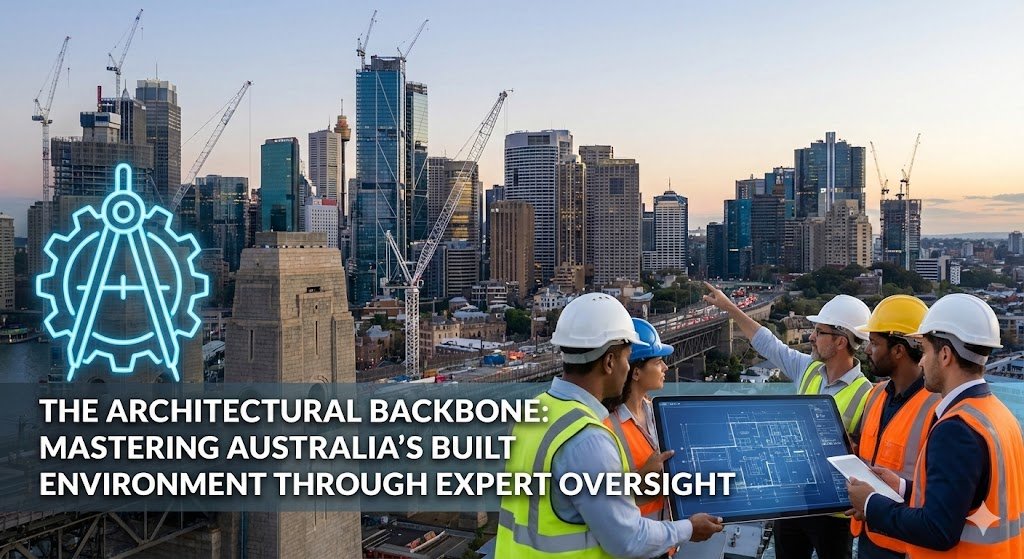
The Australian skyline is more than a mere collection of steel, glass, and concrete; it is a dynamic narrative of our nation’s economic ambition, cultural evolution, and engineering prowess. From the heritage-laden streets of Melbourne’s inner suburbs to the burgeoning growth corridors reshaping regional Victoria and New South Wales, the physical fabric of our country is in a constant state of metamorphosis. However, the journey from a visionary architectural blueprint to a tangible, functioning structure is rarely a straight line. It is a complex trajectory fraught with logistical hurdles, regulatory labyrinths, and economic fluctuations.
In today’s high-stakes construction environment, the difference between a landmark success and a costly failure often lies in the quality of oversight applied during the project’s lifecycle. As the industry grapples with rising material costs, labor shortages, and increasingly stringent sustainability mandates, the traditional methods of project coordination are no longer sufficient. Stakeholders are now turning toward more integrated, high-level approaches to ensure their visions are realized without compromising on quality or budget. This deep dive explores the critical components of modern construction consultancy and how expert oversight serves as the bedrock for Australia’s future infrastructure.
The Evolving Landscape of Australian Infrastructure
To understand the necessity of expert management, one must first appreciate the complexity of the current market. The Australian construction sector is currently undergoing a transformation of unprecedented scale. We are seeing a dual-speed economy where rapid urban renewal projects in major capital cities like Sydney, Brisbane, and Melbourne are occurring simultaneously with massive regional infrastructure injections.
In the metropolitan centers, density is the driving force. Vertical expansion is necessary to accommodate a growing population, leading to complex high-rise developments that require intricate engineering solutions and meticulous logistical planning. These projects often take place in congested urban environments where traffic management, noise control, and community impact are just as critical as the pour of the concrete. Conversely, in regional areas, the challenge lies in connectivity and resource allocation. Building the “arteries” that connect our mining hubs, agricultural centers, and coastal towns requires a macroscopic view of logistics, often spanning hundreds of kilometers and multiple local government areas.
This dichotomy presents a unique challenge for developers and investors. The sheer scale of these projects means that a minor miscalculation in the planning phase can cascade into millions of dollars in cost overruns during execution. This is where the industry is seeing a shift away from generalist project coordination toward specialized consultancy firms that can offer a granular level of expertise.
The Pillars of Modern Project Oversight
At the heart of any successful major development is a robust framework of control and communication. Professional oversight is not merely about checking boxes on a compliance sheet; it is about orchestrating a symphony of moving parts. Architects, engineers, contractors, sub-contractors, and government planners all speak different technical languages and have different priorities. The role of the project manager is to translate these disparate goals into a unified trajectory.
1. Financial Rigor and Cost Planning
One of the most volatile aspects of the current Australian market is the cost of materials. Global supply chain disruptions have made pricing unpredictable, rendering static budgets obsolete before the ground is even broken. Effective management requires dynamic cost planning—a system where budgets are living documents that adapt to market rates while maintaining strict contingency protocols. Expert consultants do not just track spending; they forecast it, using predictive modeling to anticipate inflation spikes or labor variances before they threaten the project’s bottom line.
2. Regulatory Navigation
Australia boasts some of the world’s most rigorous building codes and safety standards. While necessary for public safety, these regulations create a compliance minefield for the unprepared. From the National Construction Code (NCC) updates to state-specific environmental protection laws, the regulatory landscape is always shifting. Professional oversight ensures that a project is future-proofed against legislative changes, avoiding the nightmare scenario of retrofitting a structure that was non-compliant from the design phase.
3. Quality Assurance
In the rush to meet tight deadlines, quality can often become the first casualty. We have seen instances in the broader industry where speed was prioritized over substance, leading to structural defects that emerge years after completion. A dedicated consultancy firm acts as the guardian of quality, implementing rigorous inspection regimes at every hold point. This ensures that the integrity of the build is never compromised, protecting the asset’s value and the developer’s reputation in the long term.
The Imperative of Strategic Construction Management
Why do some megaprojects spiral out of control while others are delivered seamlessly? The answer often lies in the methodology applied at the governance level. This is where Strategic Construction Management transcends traditional project administration. It moves beyond the tactical day-to-day operations—such as scheduling and site supervision—and focuses on the overarching alignment of the project with the client’s business objectives.
This approach treats the construction project not just as a physical build, but as a capital investment that must yield a specific return, whether financial, social, or functional. By integrating this high-level strategy from the feasibility stage, consultants can identify risks that aren’t visible on a blueprint. For example, a strategic manager might identify that a proposed design, while aesthetically pleasing, utilizes materials that are currently facing a 12-month import delay. By catching this early, the strategy can be pivoted to locally sourced alternatives, saving the project from months of stagnation.
Furthermore, this strategic layer provides a buffer between the client and the chaotic reality of the site. It filters out the noise, presenting the client with actionable data and solutions rather than problems. It turns the project manager into a partner who is as invested in the “why” of the project as the “how.”
Mitigating Risk in a High-Stakes Environment
Risk management is perhaps the most valuable currency a consultancy firm offers. In the built environment, risk comes in many forms: geotechnical (what lies beneath the soil), atmospheric (weather delays), financial (insolvency of sub-contractors), and legal (contractual disputes).
The traditional approach to risk was reactive—dealing with issues as they arose. However, modern expert oversight necessitates a proactive risk matrix. This involves “war-gaming” potential scenarios before construction begins. What happens if the primary steel supplier goes bankrupt? What if the excavation reveals unexpected heritage artifacts? What if new zoning laws are passed mid-build?
By having contingency plans for these scenarios, the project remains resilient. This is particularly vital in the Australian context, where environmental factors like flooding or bushfire risks must be integrated into the construction timeline and methodology. A project that pauses for a week due to rain is normal; a project that halts for months because the drainage strategy was insufficient for a 1-in-100-year storm is a failure of planning.
Expert consultants also manage the contractual risk. The construction industry is litigious by nature. Ensuring that contracts with vendors and builders are watertight, with clear scope definitions and dispute resolution mechanisms, is essential. This protects the developer from scope creep—where the cost of the project slowly inflates due to unplanned additions—and ensures accountability across the supply chain.
The Sustainability Shift: Building for Tomorrow
No discussion on the future of Australia’s built environment is complete without addressing sustainability. It is no longer a “nice-to-have” add-on; it is a core requirement driven by both government mandate and market demand. Tenants and buyers are increasingly sophisticated, demanding Green Star ratings and energy-efficient designs that lower operational costs and carbon footprints.
However, bridging the gap between a sustainable vision and a constructible reality is difficult. Green technology often requires specialized installation and maintenance. Sustainable materials may have different structural properties than their carbon-heavy counterparts.
This is another area where Strategic Construction Management proves indispensable. A strategic manager understands the lifecycle cost of the asset. They can articulate why spending 10% more upfront on high-performance glazing or a smart HVAC system will result in a 30% reduction in operating costs over the first decade. They ensure that sustainability is baked into the DNA of the project rather than applied as a cosmetic veneer.
Furthermore, with Australia moving toward a circular economy in construction—prioritizing the reuse of materials and the reduction of waste—expert consultants are pivotal in managing the logistics of demolition and waste processing. They ensure that projects meet strict environmental protection agency standards, avoiding heavy fines and public relations disasters.
The Human Element: Stakeholders and Communication
Construction is, fundamentally, a human endeavor. It relies on the collaboration of hundreds, sometimes thousands, of individuals. Managing the “soft” side of construction—the personalities, the politics, and the expectations—is as difficult as the engineering.
For a project to succeed, there must be transparency. Clients need to know the truth about progress, even when the news is bad. Contractors need clear, unambiguous instructions. Local communities need to feel heard and respected regarding construction noise and disruption.
Expert oversight provides a centralized communication hub. Instead of a chaotic web of emails and phone calls, there is a structured flow of information. Regular reporting, utilizing dashboard-style metrics, allows stakeholders to grasp the health of the project at a glance. This transparency builds trust. When a client trusts that their management team is competent and honest, they are less likely to make panic-driven decisions that derail the process.
This human element extends to safety culture. Australia has strict Work Health and Safety (WHS) laws. The moral and legal obligation to ensure every worker goes home safe at the end of the day is paramount. Professional management firms instill a culture of safety that goes beyond compliance. They foster an environment where safety is a shared value, reducing the likelihood of accidents that cause tragedy and project shutdowns.
Technology and the Digital Horizon
The tools of the trade are changing. The clipboard and hard hat are being supplemented by tablets, drones, and digital twins. Building Information Modeling (BIM) has revolutionized how we visualize projects, allowing managers to “build” the structure virtually before a single sod is turned. This virtual construction highlights clashes—such as a duct running through a structural beam—that would have been expensive to fix on-site.
However, technology is only as good as the hands that wield it. Strategic Construction Management involves selecting the right technological stack for the specific project. It is not about using tech for the sake of it, but leveraging data to drive efficiency. For instance, using drone photogrammetry to survey vast regional sites can save weeks of manual labor. Using AI-driven scheduling software can optimize the sequence of trades, ensuring that plumbers aren’t waiting for electricians who are waiting for dry-wallers.
Silver Fox Management and similar industry leaders are at the forefront of this digital integration. By combining traditional construction wisdom with cutting-edge data analytics, they offer a level of precision that was impossible a decade ago. This technological fluency is becoming a key differentiator in the market, separating the modern consultancy firm from the legacy operators.
The Silver Fox Management Advantage
In a market crowded with contractors and consultants, what defines true value? It is the ability to deliver certainty in uncertain times. It is the capacity to take a client’s vision, no matter how ambitious, and anchor it in the reality of the Australian construction landscape.
Silver Fox Management exemplifies this ethos. With a focus that spans from the intricate details of heritage restoration to the broad strokes of infrastructure development, the approach is always bespoke. There is no “one-size-fits-all” template for construction. A residential tower in Southbank requires a completely different management cadence to a logistics hub in Western Sydney.
The firm’s philosophy rests on the understanding that they are not just building structures; they are building legacies. Whether it is a commercial precinct that revitalizes a suburb or a hospital that serves a community, the physical output is a reflection of the process. If the process is chaotic, the result is often flawed. If the process is rigorous, transparent, and expert-led, the result is excellence.
Conclusion: Orchestrating the Future
As we look toward the next decade, the challenges facing the Australian construction industry will not vanish. Supply chains will remain global and complex; weather patterns will become more unpredictable; and population growth will continue to demand infrastructure. In this environment, the “she’ll be right” attitude of the past is a recipe for disaster.
The future belongs to those who plan, those who analyze, and those who lead with authority. It belongs to developers and investors who recognize that the cost of expert advice is a fraction of the cost of failure. By embracing Strategic Construction Management, the industry can navigate these turbulent waters. We can build cities that are resilient, sustainable, and beautiful.
The blueprint for success is clear. It requires more than just bricks and mortar; it requires intelligence, foresight, and unwavering oversight. As the Australian skyline continues to evolve, it will be the projects guided by these principles that stand the test of time, serving as enduring monuments to what can be achieved when vision is matched with expert execution.