
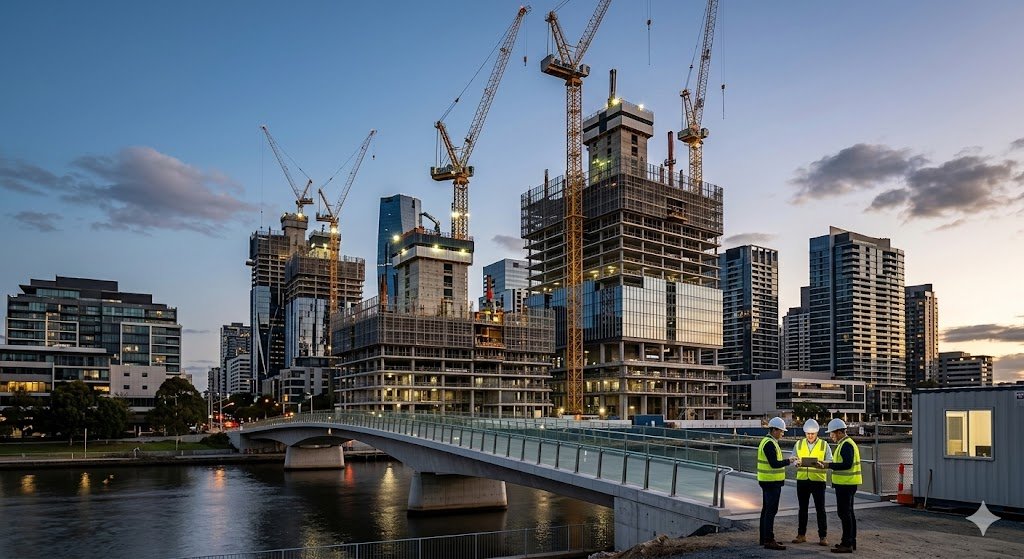
The Australian skyline is an ever-evolving canvas, serving as a dynamic and tangible narrative of the nation’s economic ambition, cultural evolution, and engineering prowess. From the heritage-laden, bustling streets of Melbourne’s inner suburbs to the burgeoning, expansive growth corridors reshaping regional Victoria, New South Wales, and beyond, the physical fabric of the country is in a constant, rapid state of transformation. Huge infrastructure pipelines, massive commercial developments, and sprawling residential projects are fundamentally altering how Australians live, work, and interact with their environments. However, the journey from an ambitious architectural vision to a completed, structurally sound, and financially viable reality is fraught with immense complexity. As projects grow in scale and sophistication, the margin for error shrinks dramatically. Attempting to navigate modern building regulations, supply chain volatilities, and multi-tiered stakeholder environments without specialized guidance is a profound financial risk. This is precisely where the intervention of expert construction consultancy becomes not just a luxury, but an absolute necessity for developers and investors aiming for success.
The Current Landscape of Australia’s Built Environment
To understand the necessity of professional oversight, one must first examine the current state of Australia’s construction and infrastructure sector. The industry is currently experiencing a metamorphosis of an unprecedented scale. It acts as the formidable backbone of the national economy, driving massive employment, fostering technological innovation, and catalyzing community growth.
Economic Drivers and Infrastructure Booms
Both federal and state governments have committed record funding to infrastructure pipelines, aiming to stimulate economic growth and accommodate a rapidly expanding population. Simultaneously, the private sector is heavily investing in mixed-use developments, urban renewal precincts, and high-density residential towers. In cities like Melbourne and Sydney, the skyline is perpetually dotted with cranes, symbolizing relentless forward momentum. However, this boom brings its own set of intense pressures. A saturated market means competition for top-tier labor is fierce, material costs are subject to global economic fluctuations, and regulatory bodies are under immense strain to process approvals and ensure compliance.
The Challenge of Scale, Complexity, and Sustainability
Modern structures are no longer simple configurations of steel, glass, and concrete. They are highly complex, living ecosystems that must integrate smart technologies, adhere to stringent environmental sustainability standards, and provide unparalleled safety for their occupants. The integration of advanced HVAC systems, automated building management systems, and sustainable energy solutions requires a level of coordination that traditional contracting models often struggle to manage effectively. The sheer scale of contemporary projects means that a single miscalculation in the early phases can compound into catastrophic delays and budget blowouts during the execution phase.
Why a Vision is Not Enough: Bridging the Gap Between Blueprint and Reality
The conception of a project is often driven by visionary architecture and optimistic financial modeling. Architects draft breathtaking blueprints that promise to redefine cityscapes, while developers calculate projected returns based on ideal market conditions. However, the gap between a beautifully rendered blueprint and the harsh realities of a live construction site is vast.
Execution is where the true test lies. Once ground is broken, projects are immediately susceptible to a myriad of unpredictable variables. Inclement weather can halt site works for weeks. Global supply chain disruptions can delay the arrival of critical structural components, from specialized steel framing to customized glass facades. Labor shortages can force compromises on scheduling, and unexpected subterranean conditions—such as undiscovered bedrock or legacy utility lines—can force sudden, costly redesigns. Without a dedicated entity overseeing the transition from design to physical build, these everyday construction hurdles can quickly spiral into insurmountable obstacles that threaten the very viability of the development.
Deconstructing the Value of Professional Oversight
In an industry defined by its inherent risks, the role of a professional oversight and management team is to act as the ultimate safeguard for the project’s overarching goals. They sit above the day-to-day contracting fray, maintaining a holistic, panoramic view of the development while possessing the technical acumen to delve into microscopic details when necessary.
Comprehensive Risk Mitigation and Compliance
Construction sites are high-risk environments, both physically and financially. A single regulatory oversight or safety breach can result in severe legal ramifications, crippling fines, and devastating reputational damage. Engaging an expert construction consultancy ensures that every phase of the project is subjected to rigorous, uncompromising scrutiny. These professionals specialize in identifying potential risks long before they manifest into tangible problems. They conduct exhaustive audits of structural plans, ensure strict adherence to occupational health and safety (OH&S) standards, and maintain an encyclopedic knowledge of the National Construction Code (NCC). By proactively mitigating risk, they protect the developer from the devastating fallout of non-compliance and structural failure.
Streamlined Stakeholder Communication
A major commercial or infrastructure project involves a labyrinthine network of stakeholders. This includes investors, financiers, architects, principal contractors, specialized subcontractors, local council authorities, and state regulatory bodies. Often, these groups operate in silos, speaking different professional languages and prioritizing different outcomes. An oversight consultant acts as the central node of truth and the primary translator between these disparate groups. They ensure that the architect’s design intent is clearly understood by the structural engineers, that the builder’s logistical constraints are communicated to the financiers, and that the developer’s budget requirements are respected by all parties. This streamlined communication prevents the costly rework and disputes that inevitably arise from misaligned expectations.
Navigating Regulatory Complexities in Modern Australian Construction
Australia boasts some of the most rigorous and complex building standards in the world. While these regulations are essential for ensuring public safety and environmental protection, they present a formidable bureaucratic hurdle for developers.
The regulatory landscape is also constantly shifting. Recent updates to the National Construction Code have introduced far stricter requirements for thermal performance, energy efficiency, and fire safety—particularly concerning exterior cladding materials in the wake of high-profile international and domestic building fires. Furthermore, navigating the intricacies of local council zoning laws, heritage overlays, and environmental impact assessments requires specialized expertise.
Projects located in heritage-rich areas, such as Melbourne’s inner-city suburbs, require a delicate balancing act. Developers must find ways to modernize and build upward while rigorously preserving the historical facades and cultural significance of the existing streetscape. Professional management teams possess the specialized knowledge required to negotiate with heritage councils, secure complex planning permits, and ensure that modern structural additions do not compromise the integrity of heritage assets. They plot a clear, legal pathway through the bureaucratic maze, preventing costly stop-work orders and prolonged legal battles with local authorities.
The Economic Logic: Maximizing ROI Through Strategic Management
From the perspective of a developer or investor, the primary objective is to maximize the return on investment (ROI). In the early stages of budget allocation, it can be tempting to view specialized oversight as an unnecessary, redundant expense. “Why pay for a consultant when we already have a principal contractor?” is a common refrain. However, this is a fundamentally flawed approach to construction economics.
The financial reality is that the cost of professional oversight is miniscule compared to the catastrophic financial hemorrhaging caused by unmanaged project delays, contractual disputes, and extensive structural rework.
Value Engineering Without Compromising Quality
One of the most powerful financial tools deployed by an expert construction consultancy is the practice of value engineering. This is not the practice of cutting corners or substituting inferior materials to save a quick dollar. True value engineering involves a profound, systematic analysis of the project design to identify alternative methodologies, superior logistical approaches, or more efficient material usages that reduce costs while maintaining or even enhancing the structural integrity and aesthetic value of the final product. By optimizing the construction methodology early in the process, consultants can save developers millions of dollars before the first foundation is ever poured.
Time Management and Critical Path Methodologies
In the world of property development, time is inextricably linked to money. Every day a project extends beyond its scheduled completion date represents a massive financial loss in the form of extended financing costs, holding charges, and delayed rental or sales income. Professional oversight teams utilize advanced project management software and Critical Path Methodologies (CPM) to map out every single dependency within the construction timeline. They identify the “critical path”—the sequence of tasks that dictate the final completion date—and focus intense management resources on ensuring these tasks are never delayed. If a supply chain issue threatens the delivery of structural steel, the management team has already formulated three alternative contingencies to keep the site operational and the critical path intact.
Future-Proofing Our Cities: Sustainability and Smart Infrastructure
As we look toward the future of the Australian built environment, sustainability is no longer an optional “add-on” or a fringe marketing tactic; it is a core commercial imperative. Institutional investors, government tenants, and environmentally conscious consumers are increasingly demanding assets that boast high Green Star ratings and excellent NABERS (National Australian Built Environment Rating System) scores.
Achieving these coveted sustainability benchmarks is incredibly complex. It requires the seamless integration of passive solar design, high-performance glazing, rainwater harvesting systems, renewable energy integration (such as extensive solar arrays), and sophisticated building automation systems that monitor and optimize energy consumption in real-time.
Professional management ensures that sustainability targets are embedded into the project’s DNA from day one. They oversee the procurement of sustainable, ethically sourced materials, monitor waste reduction protocols during the physical construction phase, and ensure that complex green technologies are installed and commissioned correctly. By future-proofing the asset, they ensure it remains commercially competitive, highly sought-after, and legally compliant for decades to come, thereby safeguarding the developer’s long-term investment.
The Regional Renaissance: Building Beyond the CBD
While the skylines of major capital cities capture the most attention, a significant portion of Australia’s construction evolution is occurring in regional areas. Driven by changing lifestyle preferences, remote work capabilities, and targeted government infrastructure spending, regional corridors in Victoria, New South Wales, and Queensland are experiencing unprecedented growth.
Developing in these regional hubs presents a distinct set of logistical challenges. Supply chains are stretched over longer distances, local skilled labor pools may be shallower than in metropolitan centers, and the geographical isolation can complicate site management. Managing these regional projects requires a highly strategic approach to logistics and procurement. Professional consultants understand how to package trade contracts to attract top-tier metropolitan contractors to regional sites, how to stockpile critical materials to mitigate transport delays, and how to integrate projects respectfully into smaller, tight-knit local communities. They bring metropolitan-grade expertise and rigor to the frontier of Australia’s regional expansion.
Resolving Disputes Before They Escalate
The construction industry is, unfortunately, notorious for its high rates of litigation and contractual disputes. The traditional adversarial relationship between developer and builder often leads to a hostile environment where every variation, weather delay, or design ambiguity becomes a battleground for financial claims. These disputes poison site culture, destroy project momentum, and consume vast amounts of capital in legal fees.
A professional oversight team acts as an independent, objective referee. Because they are intimately involved in the project’s documentation and daily progress, they possess the indisputable factual evidence required to shut down opportunistic claims and resolve legitimate disputes fairly and rapidly. They ensure that contracts are drafted with rigorous clarity, that site variations are priced transparently, and that payment schedules are strictly adhered to. By fostering a collaborative, transparent environment based on accountability rather than blame, they keep the project moving forward.
The Strategic Imperative of Professional Oversight
Building the future of Australia is a monumental task. As our cities grow taller, our infrastructure stretches further, and our environmental standards become more exacting, the old ways of managing construction are no longer sufficient. The reliance on handshake agreements, optimistic timelines, and reactive problem-solving is a recipe for commercial failure in the modern built environment.
To master the built environment, developers must approach construction not just as a physical process of assembling materials, but as a complex corporate operation requiring elite strategic management. The physical structures that will define Australia for the next century require a foundation built on rigorous planning, unyielding quality control, and proactive risk mitigation.
Ultimately, the true architecture of success lies in the systems, processes, and people who guide a project from conception to completion. For developers and investors who wish to leave a lasting, profitable legacy on the Australian skyline, the strategic deployment of an expert construction consultancy is the most critical investment they will make. It is the definitive blueprint for transforming grand ambition into enduring, structural reality.