
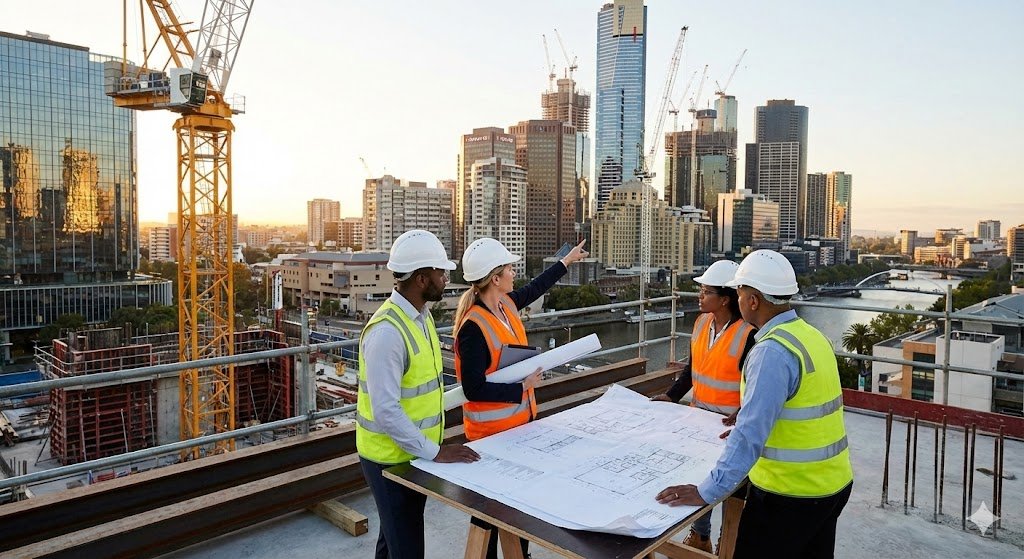
The Australian skyline is more than just a collection of glass, steel, and concrete; it is a living narrative of the nation’s ambition. From the sprawling urban renewal projects in Melbourne’s Docklands to the critical infrastructure arteries connecting regional hubs in Western Australia and Queensland, the built environment is the physical manifestation of our economic pulse. However, the journey from a visionary architectural blueprint to a tangible ribbon-cutting ceremony is fraught with complexities that were unimaginable just two decades ago.
In an era defined by volatile supply chains, stringent regulatory environments, and the urgent imperative for sustainability, the traditional methods of building are no longer sufficient. Today, the success of any significant development—whether a commercial high-rise or a public utility expansion—relies heavily on a layer of expertise that sits above the physical labor: professional consultancy and oversight.
This article delves deep into the mechanisms of modern infrastructure delivery, exploring why expert guidance is not merely an optional add-on but the very bedrock of success in Australia’s evolving construction landscape.
The Shifting Sands of the Australian Construction Landscape
To understand the necessity of high-level management, one must first appreciate the terrain upon which today’s projects are built. The Australian construction industry is a powerhouse, contributing significantly to the GDP and employing hundreds of thousands of workers. Yet, it is an industry currently navigating a “perfect storm” of challenges.
Economic Pressures and Material Volatility
The post-pandemic world has left an indelible mark on global logistics. For Australian developers, this translates to unpredictable fluctuations in the cost of raw materials. Steel, timber, and concrete—the trinity of construction—have seen price spikes that can derail a project’s budget before the ground is even broken. Without a robust strategy to hedge against these costs or procurement models that allow for flexibility, projects are vulnerable to massive cost overruns.
The Regulatory Labyrinth
Australia boasts some of the world’s highest standards for safety and building quality. While this ensures the longevity and safety of our structures, it also creates a dense thicket of red tape. From local council approvals in suburban Sydney to environmental impact statements for regional developments, the compliance workload is immense. Navigating these legalities requires more than just a familiarity with the rules; it demands a strategic foresight to anticipate legislative shifts and ensure that a project remains compliant from inception to completion.
Defining Strategic Construction Management in the Modern Era
This brings us to the solution. In the past, “project management” might have been viewed simply as a scheduling exercise—ensuring the plumbers arrive after the framers. Today, the discipline has evolved into something far more sophisticated.
Strategic Construction Management is the art and science of aligning the physical execution of a project with the broader business and economic goals of the stakeholders. It is not just about “building it right”; it is about “building the right thing, at the right time, for the right price.”
Beyond Simple Oversight: A Holistic Approach
True strategic management involves a holistic view of the project lifecycle. It begins long before the site is fenced off. It involves feasibility studies that challenge the initial assumptions of the investors. It involves value engineering—looking at the design and asking, “Is there a more efficient way to achieve this aesthetic or functional goal?”
For firms like Silver Fox Management, this holistic approach is central to the ethos. It represents a shift from being reactive—solving problems as they arise on site—to being proactive, identifying potential bottlenecks in the design phase and neutralizing them. This shift is what separates a chaotic, over-budget project from a seamless delivery.
The Lifecycle of a Megaproject: Where Expertise Matters
To illustrate the value of professional consultancy, let us walk through the lifecycle of a major development and identify where expert intervention adds value.
Pre-Construction: Where Battles are Won
There is an industry adage that says a project is made or broken in the first 10% of the timeline. The pre-construction phase is where the “DNA” of the project is defined. This is where contracts are structured, where risks are allocated, and where the budget is solidified.
An expert consultant acts as the client’s advocate during this phase. They scrutinize the tender documentation to ensure there are no ambiguities that contractors could exploit later. They assess the feasibility of the timeline, ensuring that “political” deadlines (dates set for marketing or public relations reasons) do not compromise the engineering reality. By rigorously stress-testing the plan before execution begins, they prevent the expensive “change orders” that plague poorly managed projects.
Execution: Managing the Moving Parts
Once construction commences, the site becomes a dynamic, high-stakes environment. On a major project, there may be dozens of subcontractors, hundreds of workers, and millions of dollars in machinery operating simultaneously.
The role of the project manager here transitions to that of a conductor. They must ensure that the structural engineers, the MEP (Mechanical, Electrical, and Plumbing) teams, and the architectural designers are all interpreting the blueprint in unison. When clashes occur—such as a ventilation duct running through a structural beam—it is the management team that must mediate the solution, ensuring it doesn’t impact the structural integrity or the project timeline.
Risk Mitigation: The Core of Strategic Construction Management
If one were to distill the value of consultancy down to a single word, it would be “certainty.” Investors and developers despise uncertainty. They need to know that their capital is safe and that their returns are calculated on solid ground. This is where Strategic Construction Management functions as a high-level insurance policy.
Financial Risk and Budget Adherence
In the current economic climate, financing costs are high. Every day a project runs over schedule is a day of accrued interest and lost revenue. Effective management implements rigorous cost controls. This involves “earned value management,” a technique that tracks the value of work completed against the budget spent, giving a real-time health check of the project’s finances.
Furthermore, expert managers maintain a risk register. This is a living document that tracks potential threats—from inclement weather patterns (like La Niña affecting the East Coast) to potential labor strikes. By quantifying these risks and assigning contingency budgets to them, the management team ensures that when a problem hits, the project has the financial resilience to absorb the shock without collapsing.
Dispute Resolution and Contract Administration
Disputes are an unfortunate reality of the construction industry. Whether it is a disagreement over the quality of finishes or a debate regarding “force majeure” delays, conflicts can quickly escalate into litigation. A seasoned consultancy firm acts as a buffer. By administering the contract impartially and maintaining impeccable documentation of all site activities, they can often resolve disputes at the site level before they reach the courtroom. This preservation of commercial relationships is often undervalued but is critical for the long-term reputation of the developer.
Sustainability and the Future of the Built Environment
We cannot discuss the future of Australian construction without addressing the green elephant in the room: sustainability. The built environment is a major contributor to carbon emissions, and there is immense societal and regulatory pressure to build greener.
Integrating Green Technologies
Modern project management involves navigating the complex requirements of Green Star ratings and NABERS (National Australian Built Environment Rating System) certifications. It requires a knowledge base that extends to sustainable materials, passive solar design, and energy-efficient building systems.
However, sustainability often comes with a higher upfront cost. The role of the strategic manager is to perform lifecycle costing analysis. They demonstrate to the client that while a high-efficiency HVAC system or a photovoltaic glass façade may cost more initially, the reduction in operational costs over the building’s 50-year lifespan yields a massive return on investment. This ability to translate “green” goals into “black” numbers on a balance sheet is a key skill set of the modern consultant.
The Human Element: Leadership in Construction
Amidst the talk of concrete, contracts, and cash flow, it is easy to forget that construction is a fundamentally human endeavor. It relies on communication, leadership, and morale.
Stakeholder Communication
A major development has a diverse array of stakeholders: the investors, the end-users, the local community, the council, and the construction workforce. Each of these groups has different priorities and speaks a different language. The investor cares about ROI; the council cares about zoning compliance; the community cares about noise and traffic.
Strategic Construction Management acts as the universal translator. The management team synthesizes the technical data from the engineers and presents it to the investors in financial terms. Conversely, they take the business objectives of the client and translate them into operational directives for the site crew. This alignment ensures that everyone is pulling in the same direction.
Furthermore, effective leadership fosters a safety culture. In Australia, workplace safety is paramount. A management team that prioritizes safety not only protects lives but also protects the project from the devastating delays and legal consequences of site accidents.
Why Consultancy is the Keystone of Success
As we look toward the future, the projects on the Australian horizon are becoming increasingly ambitious. We are looking at high-speed rail networks, renewable energy hubs, and smart cities that integrate digital technology into the physical fabric of the streets.
These are not just construction projects; they are nation-building exercises. They are too important, too expensive, and too complex to be left to chance. The “she’ll be right” attitude of the past has no place in the high-stakes arena of modern infrastructure.
Firms that specialize in this high-level consultancy, like Silver Fox Management, provide the intellectual scaffolding that supports the physical structure. They bring lessons learned from previous megaprojects, ensuring that mistakes are not repeated. They bring a network of trusted suppliers and contractors. Most importantly, they bring a disciplined methodology that imposes order on chaos.
The Silver Fox Ethos
While many firms offer project management, the distinction often lies in the depth of engagement. The best consultancies view themselves as partners rather than service providers. They adopt the client’s headaches as their own. They don’t just report on the weather; they build the shelter. This level of commitment is what transforms a distressed project into an award-winning landmark.
Conclusion
The Australian built environment is in a state of constant evolution. As our cities grow denser and our infrastructure needs become more acute, the margin for error shrinks. The challenges of material scarcity, regulatory complexity, and environmental responsibility create a barrier to entry that only the most well-prepared can cross.
In this environment, the blueprint is only as good as the hand that guides its execution. The reliance on expert consultancy is not an admission of weakness by a developer, but a declaration of intent. It signifies a commitment to quality, efficiency, and longevity.
Ultimately, the buildings that will define the next century of Australian life will be defined by Strategic Construction Management. It is the invisible force that holds the project together, ensuring that the skyline we build today stands resilient against the challenges of tomorrow. For any stakeholder looking to leave a mark on the Australian landscape, the message is clear: invest in expertise, plan with precision, and build with a strategy that goes beyond the brick and mortar.