
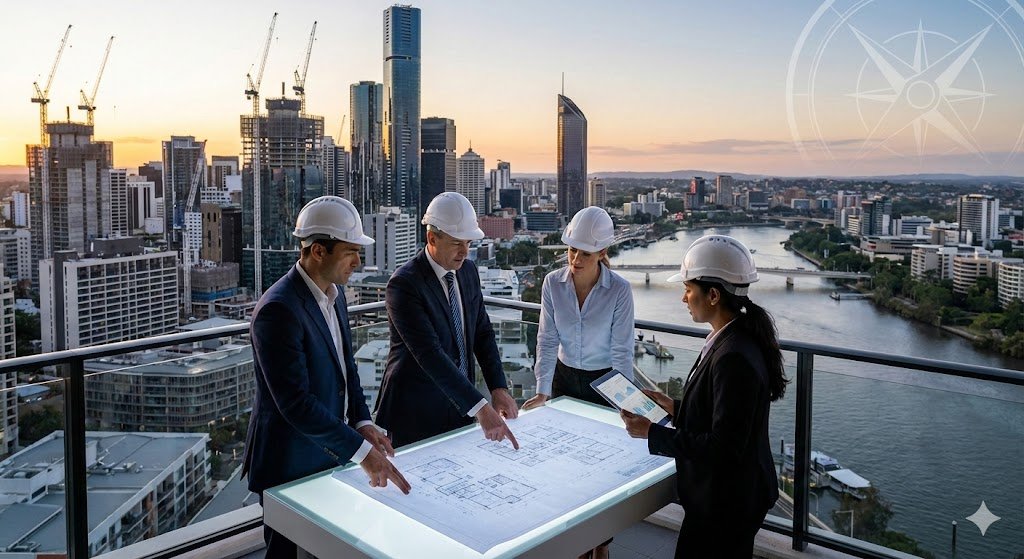
The Australian skyline is more than just a collection of steel, glass, and concrete; it is a dynamic narrative of economic ambition, cultural evolution, and engineering prowess. From the heritage-laden streets of Melbourne’s inner suburbs to the burgeoning growth corridors reshaping regional Victoria and New South Wales, the physical fabric of our nation is in a constant state of transformation. However, for property developers, investors, and stakeholders, the path from a visionary architectural concept to a tangible, high-performing asset is rarely a straight line. It is a journey fraught with complexity, risk, and fluctuating market conditions that demand more than just a builder’s skillset—it requires high-level oversight and strategic direction.
In recent years, the Australian construction industry has faced a perfect storm of challenges. We have seen unprecedented volatility in material costs, significant labor shortages, and an increasingly rigorous regulatory environment. These factors have thinned margins and increased the stakes for every project, whether it is a boutique residential development or a large-scale commercial infrastructure project. In this high-pressure environment, the difference between a project that delivers exceptional return on investment and one that flounders in delays and disputes often comes down to one critical factor: the quality of the management team guiding the process. This blog explores the deep intricacies of the modern built environment and why professional consultancy is the bedrock of successful project delivery.
The Shifting Sands of the Australian Construction Sector
To understand the necessity of expert guidance, one must first appreciate the volatility of the current landscape. The Australian construction sector is currently undergoing a metamorphosis of unprecedented scale. Historically, the industry has operated in cycles of boom and bust, but the current era is defined by a unique set of variables that have fundamentally altered the rules of engagement.
Firstly, supply chain resilience has become a primary concern. The post-pandemic era has left global logistics in a fragile state, meaning that the procurement of essential materials—from structural steel to specialized glazing—can no longer be taken for granted. Delays in shipping or manufacturing can cascade through a project schedule, causing blowouts that threaten financial viability.
Secondly, the regulatory framework in Australia is becoming increasingly complex. With stricter adherence to the National Construction Code (NCC), heightened focus on fire safety compliance following global and local incidents, and rigorous environmental standards, the administrative burden on projects has skyrocketed. Navigating these compliance requirements is not merely a box-ticking exercise; it involves strategic planning to ensure that design and buildability align with legal obligations without compromising the aesthetic or functional vision of the project.
Furthermore, we cannot ignore the economic pressures. Inflationary environments mean that feasibility studies conducted six months ago may no longer hold true today. Cost escalation is a silent killer of projects, often eroding contingency funds before the ground is even broken. In this context, the traditional “set and forget” approach to engagement is obsolete. Developers require a partner who can forecast these shifts and pivot strategies accordingly.
Defining the Core of Success: The Strategic Approach
Amidst this volatility, the role of the project manager has evolved from a simple administrator to a strategic linchpin. It is no longer enough to merely track progress against a Gantt chart. True value is generated when the management team acts as a bridge between the commercial objectives of the client and the technical realities of the construction site.
This is where strategic construction project management becomes the defining asset of a development. Unlike standard project coordination, which reacts to issues as they arise, a strategic approach is proactive. It involves interrogating the design during the pre-construction phase to identify potential conflicts, value engineering the scope to maximize budget efficiency without sacrificing quality, and establishing robust communication channels that keep all stakeholders aligned. By embedding this level of foresight into the project DNA, consultants can neutralize threats before they manifest as costly delays.
For instance, consider the tender process. A standard manager might simply distribute documentation and accept the lowest bid. However, a strategic manager understands that the lowest price often comes with the highest risk. They will analyze the tender submissions for completeness, interrogate the builder’s methodology, and negotiate terms that protect the client from variations down the line. This depth of engagement ensures that the project team is built on a foundation of competence and transparency, rather than just cost-cutting.
Risk Mitigation in a High-Stakes Environment
Risk is inherent in construction, but it is not unmanageable. The secret lies in identifying the specific risk profile of a project early and implementing mitigation strategies that are both practical and contractual.
Financial risk is often the most visible concern. In an era of rising interest rates and construction costs, maintaining cash flow and budget discipline is paramount. Expert consultants utilize sophisticated cost-reporting tools that provide real-time visibility into financial health, allowing clients to make informed decisions. If a specific material cost spikes, the team can quickly evaluate alternatives or adjust other areas of the scope to maintain the bottom line.
However, safety and compliance risks are equally critical. The legal ramifications of non-compliance in Australia are severe, carrying heavy penalties and potential litigation. A professional project management team acts as a rigorous gatekeeper, ensuring that every stage of the build adheres to safety legislation and building codes. They manage the independent testers, surveyors, and certifiers to create an audit trail that protects the asset owner’s liability.
Reputational risk is another dimension that is often overlooked. For developers, their brand is their currency. A project that is plagued by defects, delays, or community complaints can tarnish a reputation that took decades to build. By maintaining strict quality control and managing community stakeholder relations effectively, consultants safeguard the developer’s long-term standing in the market.
The Sustainability and Innovation Frontier
Modern construction is not just about keeping the rain out; it is about creating environments that are sustainable, energy-efficient, and technologically advanced. The push towards “Green Building” is driven by both regulatory pressure and market demand. Tenants and buyers are increasingly sophisticated, seeking properties that offer lower running costs and a smaller carbon footprint.
Integrating sustainability initiatives requires a nuanced understanding of both building science and economics. It is easy to design a “green” building that is too expensive to build. The challenge lies in finding the “sweet spot” where environmental performance drives economic value. This might involve the strategic selection of thermal mass materials, the integration of smart building management systems, or the use of renewable energy sources.
This complex integration is a core component of strategic construction project management. An expert team will guide the design process to ensure that sustainability targets—such as Green Star or NABERS ratings—are met in the most cost-effective manner. They facilitate the collaboration between architects, services engineers, and sustainability consultants to ensure that green initiatives are baked into the design rather than bolted on as expensive afterthoughts. Furthermore, they oversee the construction process to ensure that the specified high-performance materials are installed correctly, guaranteeing that the theoretical energy savings are realized in operation.
The Lifecycle Approach: From Feasibility to Handover
To truly appreciate the value of professional consultancy, one must look at the project lifecycle as a whole. A project is an organic entity that changes character as it moves through its phases, and each phase requires a distinct management style.
1. Feasibility and Concept Phase: This is the “make or break” stage. An expert consultant will conduct a ruthless interrogation of the project’s viability. They analyze the site conditions, planning constraints, and market depth to validate the business case. This early involvement prevents clients from overcapitalizing on sites that have hidden constraints, such as soil contamination or restrictive heritage overlays.
2. Design and Documentation: Design management is the art of balancing aesthetics with buildability. Left unchecked, design teams can sometimes drift towards solutions that are beautiful but prohibitively expensive or complex. The project manager steers the design team, ensuring that the documentation is robust enough to minimize ambiguity during construction. Clear documentation is the best defense against builder variations.
3. Tendering and Procurement: As mentioned earlier, selecting the right builder is crucial. The management team curates a list of suitable contractors, manages the RFI (Request for Information) process, and conducts tender interviews. This rigorous vetting process ensures that the appointed builder has the financial stability and technical capability to deliver the project.
4. Construction Delivery: Once the sod is turned, the project manager becomes the Superintendent (or client representative). They administer the building contract, acting as an impartial adjudicator on claims for time and cost. They chair site meetings, inspect the quality of works, and ensure the program is being met. This is where the theoretical benefits of strategic construction project management become tangible reality. By holding the builder to account and solving site issues proactively, the manager keeps the project on the rails.
5. Handover and Defect Liability: The project doesn’t end when the scaffolding comes down. The transition from construction site to operational asset is a critical period. The management team oversees the commissioning of services, the collation of warranties and manuals, and the rectification of defects. A smooth handover ensures that the end-users are satisfied and that the client can begin realizing revenue immediately.
Why Independent Consultancy Matters
There is often a misconception that a builder can manage the project themselves. While many builders are excellent at construction, their primary motivation is profit margin and schedule efficiency from their own perspective. There is an inherent conflict of interest when the entity responsible for building the project is also responsible for validating the quality and cost of that work.
Independent consultancy provides a necessary layer of protection for the client. It ensures that there is “tension” in the system—a healthy system of checks and balances where advice is given without fear or favor. The independent project manager works solely for the client, ensuring that every decision made serves the project’s best interests rather than the builder’s convenience.
This independence is particularly vital when disputes arise. Construction contracts are complex legal instruments. When a builder claims a variation or an extension of time, the client needs an advocate who understands the contract mechanics and can validate whether the claim is legitimate. This advocacy alone often saves clients multiples of the management fee.
Future-Proofing Through Technology and Innovation
The future of construction in Australia is digital. We are seeing the rapid adoption of Building Information Modelling (BIM), drone surveying, and digital twin technology. These tools offer immense potential to improve accuracy and efficiency, but they also add a layer of technical complexity to the management process.
Effective project management firms are at the forefront of this digital shift. They utilize cloud-based collaboration platforms to ensure that all stakeholders have access to the “single source of truth” regarding drawings and specifications. They use data analytics to track project performance trends, allowing for data-driven decision-making.
By embracing these technologies, consultants can offer clients a higher level of transparency. A developer in Singapore can log into a dashboard and see real-time progress photos and financial reports for their project in Melbourne. This connectivity builds trust and ensures that distance is no barrier to control.
The Silver Fox Approach: Excellence in Execution
While the principles discussed here are universal, the application requires a team with specific local knowledge and a dedication to excellence. In the context of the Australian market, firms that combine technical rigour with relationship-based management tend to outperform. Construction is, fundamentally, a people business. It relies on the ability to negotiate, persuade, and lead diverse teams towards a common goal.
The approach championed by industry leaders involves a deep commitment to “ownership” of the project. It means treating the client’s money as if it were their own and caring about the final finish as much as the architect does. It is this cultural alignment that separates a vendor from a true partner.
Conclusion
As Australia continues to grow, the demands on our built environment will only intensify. We are moving towards denser cities, more complex infrastructure, and higher performance standards for our buildings. In this evolving landscape, the “she’ll be right” attitude of the past is a recipe for disaster. Success demands precision, foresight, and rigorous control.
For developers and investors, the message is clear: the quality of your project management is the single greatest predictor of your project’s success. It is the shield that protects your capital and the engine that drives your vision forward. By investing in strategic construction project management, stakeholders are not just buying a service; they are securing the future of their assets. As we look to the horizon, it is this expert oversight that will define the next generation of Australia’s architectural triumphs, ensuring that our skyline remains a testament to quality, resilience, and visionary planning.