
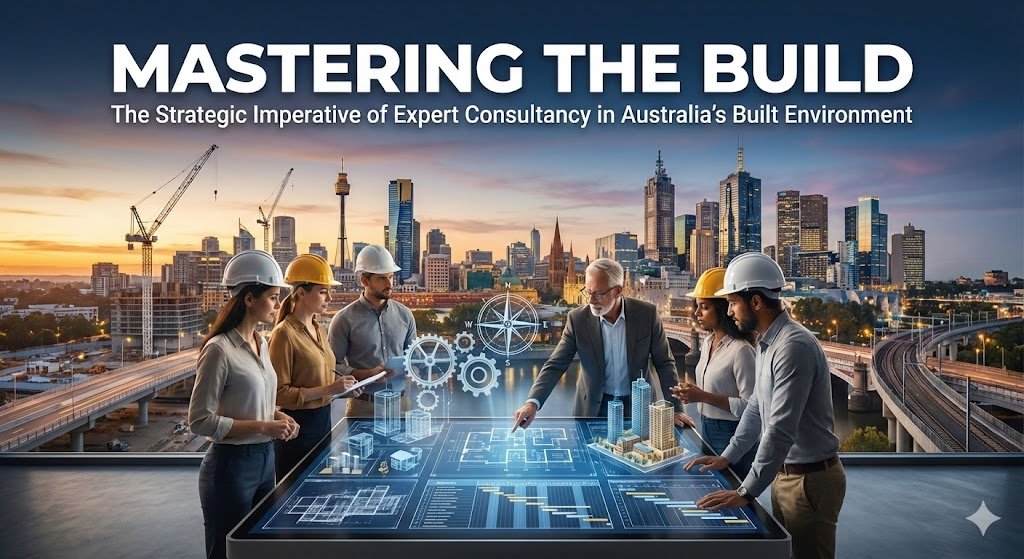
The Australian skyline is a living narrative of ambition, resilience, and economic power. From the architectural marvels reshaping the Melbourne CBD to the sprawling infrastructure projects connecting regional hubs, the nation is in a perpetual state of transformation. However, the path from a visionary blueprint to a tangible structure is rarely a straight line. It is a complex journey fraught with logistical hurdles, regulatory labyrinths, and volatile market conditions.
In this high-stakes environment, the difference between a landmark success and a costly failure often rests on a single pivot point: the quality of leadership guiding the process. As the industry grapples with rising material costs, labor shortages, and increasing demands for sustainability, the role of specialized oversight has never been more critical. This article delves deep into the mechanisms of modern building success, exploring how strategic planning, risk mitigation, and expert consultancy form the bedrock of Australia’s construction future.
The Evolving Landscape of Australian Construction
To understand the necessity of high-level consultancy, one must first appreciate the volatility of the current market. The Australian construction sector is an economic engine, employing hundreds of thousands and driving significant GDP growth. Yet, it is an engine that requires precise tuning.
Navigating Regulatory Complexity
Australia boasts some of the most stringent building regulations in the world. From the National Construction Code (NCC) to local council planning schemes, the regulatory framework is a shifting sand of compliance requirements. For developers and investors, navigating this legal maze without guidance is a recipe for delay. Recent updates focusing on fire safety, cladding compliance, and accessibility have added layers of responsibility to every project.
Professional consultancy firms act as the navigator in this terrain. By staying ahead of legislative changes, they ensure that projects are not just compliant at the time of design, but remain future-proofed against upcoming legal shifts. This proactive approach prevents the dreaded retrofitting costs that can cripple a project’s budget post-completion.
The Challenge of Rising Costs
Global supply chain disruptions and local inflationary pressures have sent the cost of raw materials—timber, steel, and concrete—soaring. In such a climate, the traditional “set and forget” budget is obsolete. Modern projects require dynamic financial modeling and aggressive cost control mechanisms.
This is where the true value of construction project management shines. It is not merely about tracking receipts; it is about strategic procurement, value engineering, and anticipating market fluctuations before they impact the bottom line. Expert managers leverage deep industry networks to secure better rates and identify alternative materials that maintain quality while reducing expense.
The Strategic Value of Professional Consultancy
Many stakeholders mistakenly view project management as an administrative function—a box to be checked. However, in the niche occupied by firms like Silver Fox Management, it is a strategic discipline. It involves a holistic view of the project lifecycle, from the initial feasibility study to the final handover.
Moving Beyond Basic Oversight
Basic oversight ensures that workers are on site and materials arrive. Strategic consultancy, however, aligns the physical build with the client’s broader business goals. For a residential developer, this might mean accelerating the schedule to hit a specific market window. For a commercial client, it might involve integrating smart-building technologies to maximize long-term tenant yield.
Realizing these goals requires a partner who acts as an extension of the client’s interests. This partner bridges the gap between the technical language of engineers and the financial language of investors, ensuring that every decision made on the ground supports the overarching vision.
Risk Mitigation as a Core Competency
Every construction project carries inherent risks: weather delays, industrial disputes, latent site conditions, and design errors. The amateur hopes these don’t happen; the expert assumes they will and plans accordingly.
Effective risk management involves a rigorous process of identification, assessment, and mitigation. By maintaining a comprehensive risk register, consultants can deploy contingency plans the moment a threat materializes. This might involve carrying float in the schedule for inclement weather or maintaining backup suppliers for critical path materials. In this context, construction project management acts as an insurance policy, protecting the client’s capital from the myriad uncertainties of the physical world.
Core Pillars of Effective Project Delivery
Success in the built environment is rarely accidental. It is the result of executing several core disciplines with military precision.
Meticulous Planning and Scheduling
Time is the one resource that cannot be replenished. In construction, time is also money—literally. Every day a crane sits idle or a site remains unopened costs thousands in overheads and lost potential revenue.
High-level consultancy utilizes advanced scheduling software and Critical Path Method (CPM) techniques to optimize the workflow. This involves coordinating hundreds of subcontractors so that their work overlaps efficiently without interference. It requires a deep understanding of the sequence of construction, ensuring that the plumber isn’t scheduled before the framer, and that the concrete cure times are factored into the handover date.
Financial Stewardship and Cost Control
Budget overruns are the nemesis of the construction industry. They erode profit margins and damage relationships between lenders and developers. rigorous cost control goes beyond simple bookkeeping. It involves:
- Accurate Estimation: Using historical data and current market rates to build realistic budgets.
- Value Engineering: Analyzing building components to find less expensive alternatives that provide the same function and aesthetic.
- Change Management: Strictly controlling variations to the contract. Scope creep is a silent killer of budgets; expert managers ensure that every change is costed, approved, and justified before implementation.
- Progress Claims Assessment: Verifying that the work claimed by contractors has actually been completed to the required standard before releasing funds.
Quality Assurance and Safety
In the rush to finish, quality can often slip. However, the cost of rectifying defects after completion is exponentially higher than getting it right the first time. A rigorous Quality Assurance (QA) program involves regular inspections, hold points, and strict adherence to specifications.
Furthermore, safety is non-negotiable. The moral and legal imperative to send every worker home safely is paramount. A safe site is also an efficient site; accidents cause shutdowns and investigations that derail timelines. Professional consultants instil a culture of safety that permeates every level of the workforce.
Sustainability: The New Standard
Sustainability is no longer a buzzword; it is a market demand and a regulatory requirement. The modern tenant demands energy efficiency, and the modern investor looks for Green Star ratings.
Implementing Green Building Practices
Leading consultancy firms are at the forefront of the green revolution. They guide clients through the complexities of sustainable design, suggesting passive solar orientations, high-performance glazing, and energy-efficient HVAC systems.
But sustainability also extends to the construction process itself. This means minimizing waste, recycling demolition materials, and choosing suppliers with lower carbon footprints.
Long-Term Efficiency and Lifecycle Costs
A cheap building often costs more to run. Expert managers help clients understand the concept of lifecycle costing—investing slightly more upfront in durable materials or efficient systems to save millions in maintenance and energy bills over the building’s 50-year lifespan. This long-term thinking is a hallmark of the strategic approach found in top-tier construction project management.
Why Expertise is Non-Negotiable
The sheer complexity of modern construction projects renders the “DIY” approach impossible for serious developers. The supply chain has fragmented, with materials sourced from all corners of the globe. Stakeholder lists have grown to include not just the client and builder, but local communities, environmental groups, heritage consultants, and traffic authorities.
Managing Complex Supply Chains
When a single missing component can halt a multi-million dollar project, supply chain management becomes critical. Experts maintain relationships with a vast network of suppliers and fabricators. They understand lead times—knowing that the custom glazing from Europe needs to be ordered six months in advance, or that the local steel fabricator is booked out until Christmas.
Stakeholder Communication and Management
Construction is ultimately a people business. Friction often arises not from technical issues, but from miscommunication. Whether it is managing the expectations of a nervous neighbor or negotiating a complex variation with a head contractor, the project manager acts as the diplomatic hub.
They translate the complex realities of the site into clear, actionable reports for the client. They ensure that bad news is delivered early—when it can still be managed—rather than late, when it has become a disaster. This transparency builds trust and keeps the project team aligned and motivated.
The Future of Building in Australia
As we look toward the future, the industry is poised for further disruption and evolution. Technology is playing an increasingly pivotal role. Building Information Modelling (BIM) allows for virtual construction before a shovel hits the ground, identifying clashes and design errors in the digital realm where they cost nothing to fix.
Embracing Digital Transformation
Firms that embrace these digital tools offer their clients a significant competitive advantage. Drones are being used for site surveys and safety inspections. AI is beginning to assist in schedule optimization and risk prediction. The consultant of the future is part engineer, part data analyst.
Resilience in a Changing Climate
Australia’s harsh climate is becoming more extreme. Future projects must be designed not just for today’s weather, but for the climate of 2050. This involves planning for flood resilience, bushfire resistance, and extreme heat. Strategic management involves consulting with climate experts to ensure assets remain insurable and viable in the long term.
Conclusion
The narrative of Australia’s built environment is one of constant ambition. However, as our cities grow denser and our infrastructure more complex, the margin for error shrinks. The days of managing a major development on the back of an envelope are long gone.
Success in this arena requires a sophisticated blend of technical knowledge, legal acumen, financial discipline, and leadership. It requires a partner who understands that a building is more than concrete and glass—it is an investment, a community asset, and a legacy.
Whether dealing with the intricacies of inner-city planning permits in Melbourne or coordinating logistics for remote regional builds, the guiding hand of a professional is indispensable. By prioritizing meticulous planning, rigorous risk management, and unwavering quality control, developers can navigate the turbulent waters of the industry.
Ultimately, the goal is to deliver projects that stand the test of time, both structurally and financially. In achieving this, construction project management is not just a service; it is the cornerstone of Australia’s built future. It is the discipline that turns volatile potential into concrete reality, ensuring that the skylines of tomorrow are built on the firmest of foundations.