
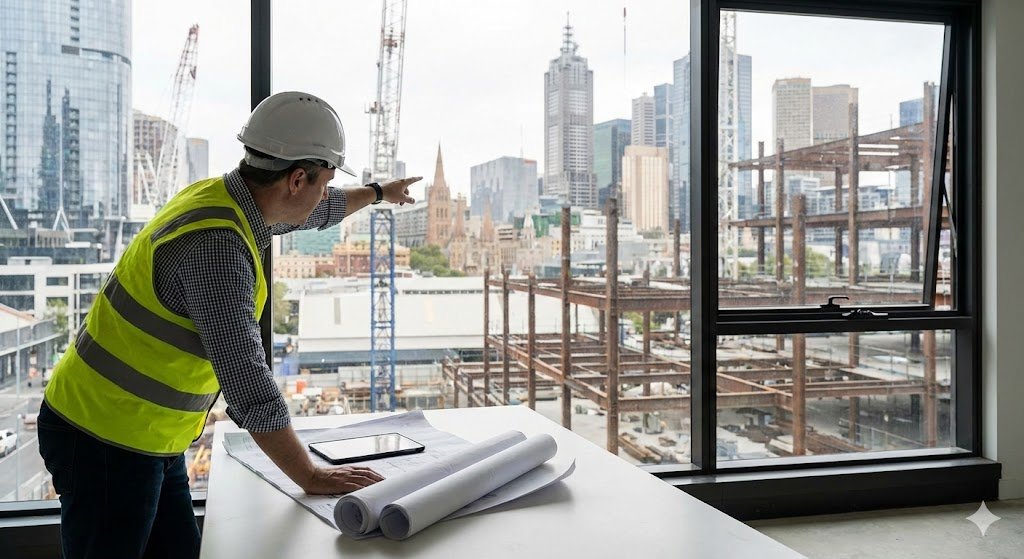
The Australian skyline is more than just a collection of steel, glass, and concrete; it is a living narrative of the nation’s ambition, economic resilience, and architectural prowess. From the heritage-lined streets of Melbourne’s inner suburbs to the expansive growth corridors transforming regional Victoria, the physical fabric of our country is in a state of constant evolution. However, the journey from a visionary architectural concept to a tangible, functioning structure is rarely a linear path. It is a complex voyage fraught with economic volatility, regulatory hurdles, and logistical intricacies.
In today’s high-stakes construction environment, the “build it and they will come” mentality is no longer sufficient. Developers, investors, and stakeholders are increasingly recognizing that the difference between a landmark success and a costly failure lies in the quality of the management behind the scenes. This is where the industry is seeing a paradigm shift—moving away from traditional oversight toward a more integrated, holistic approach to project delivery.
The Evolving Landscape of Australian Construction
The construction sector in Australia serves as the backbone of the national economy, driving employment, innovation, and community growth. Yet, it is an industry currently navigating its most significant transformation in decades. The days of predictable supply chains and stable material costs appear to be behind us, replaced by a dynamic environment that demands agility and foresight.
Navigating Economic Volatility
One of the most pressing challenges facing modern developments is the fluctuation in global markets. Rising material costs—driven by international supply chain disruptions—have squeezed margins and forced developers to rethink their feasibility studies. Whether it is the price of timber, the availability of steel, or the cost of skilled labor, every variable impacts the bottom line. In this climate, rigid planning is a liability. Projects require adaptive strategies that can absorb economic shocks without derailing the entire timeline.
The Regulatory Maze
Beyond economics, the regulatory framework governing Australia’s built environment has become increasingly sophisticated. With stricter compliance standards regarding safety, environmental impact, and building quality, the administrative burden on projects has grown. Navigating local council requirements in Victoria, for instance, requires not just knowledge of the rules, but an understanding of how to interpret them effectively to maintain project momentum. This complexity highlights the need for a steady hand at the helm—professionals who understand that compliance is not just a checkbox, but a fundamental component of a project’s long-term viability.
The Strategic Imperative of Expert Consultancy
In an era of megaprojects and mixed-use developments, the role of the construction consultant has evolved from a passive advisor to an active strategic partner. The sheer scale of modern projects means that small errors in the planning phase can compound into massive liabilities during execution.
bridging the Gap Between Vision and Reality
Architects dream in visuals and aesthetics; engineers focus on structural integrity and physics. The gap between these two vital disciplines is often where friction occurs. Expert consultancy acts as the bridge, translating the aesthetic vision into a constructible reality that meets engineering standards and budget constraints. This alignment is crucial. Without it, projects often suffer from “scope creep,” where the original vision is diluted by practical necessities, or conversely, where practical necessities are ignored until they become expensive emergencies.
Stakeholder Management and Communication
A construction project is a symphony of moving parts, involving investors, government bodies, contractors, subcontractors, and the local community. Managing the expectations and communications between these diverse groups is a full-time job. Miscommunication is one of the leading causes of project delays. Effective management ensures that all parties are singing from the same hymn sheet, maintaining transparency regarding timelines, costs, and challenges.
The Core Pillars of Project Success
To ensure a project stands the test of time—both structurally and financially—certain pillars of management must be upheld with rigor. These pillars form the foundation upon which successful developments are built.
Comprehensive Risk Mitigation
Risk is inherent in construction. However, it is not the existence of risk that causes failure, but the inability to identify and mitigate it early. Advanced project oversight involves a proactive “pre-mortem” approach, identifying potential bottlenecks—be it inclement weather patterns, labor union negotiations, or geotechnical surprises—before ground is even broken. By quantifying these risks and assigning contingencies, managers protect the project’s profitability.
Financial Stewardship
Budget blowouts are the nightmare of every developer. In the current Australian market, where margins can be tight, financial stewardship is paramount. This goes beyond simple bookkeeping; it involves value engineering. Value engineering is the art of analyzing building features, systems, and equipment to achieve essential functions at the lowest life-cycle cost, consistent with required performance, reliability, quality, and safety. It ensures that money is spent where it adds the most value to the final asset, rather than being wasted on inefficiencies.
Why Strategic Construction Management is Essential
This brings us to the heart of modern project delivery. It is no longer enough to simply “manage” a construction site; one must strategize it. Strategic Construction Management is the discipline of aligning the project’s objectives with the broader business goals of the client. It elevates the process from a series of transactional tasks to a cohesive, objective-driven campaign.
When a team employs Strategic Construction Management, they are not just looking at the week ahead; they are forecasting the trajectory of the entire build. They are analyzing how a delay in foundation pouring today impacts the interior fit-out six months from now. This high-level view allows for the optimization of resources, ensuring that labor and materials arrive exactly when needed, minimizing downtime and storage costs.
Furthermore, Strategic Construction Management provides a layer of accountability that is often missing in traditional models. It ensures that there is a single source of truth for the project’s status, eliminating the “blame game” that often occurs between contractors and designers when things go wrong. By centralizing responsibility, decisions can be made faster and with greater confidence.
Finally, the implementation of Strategic Construction Management is critical for maintaining investor confidence. in a volatile market, capital partners want assurance that their investment is being handled with the same level of sophistication as a financial portfolio. They demand reporting that is accurate, transparent, and forward-looking—capabilities that are the hallmark of this management style.
Sustainability: The New Standard
No discussion of the Australian built environment is complete without addressing sustainability. The push for “Green Star” ratings and energy-efficient designs is driven not just by conscience, but by market demand and legislation.
Implementing Green Building Practices
Modern tenants and buyers are increasingly sophisticated, demanding spaces that are environmentally responsible and cheaper to run. Integrating solar passive design, water recycling systems, and low-carbon materials is now standard practice for premium developments. However, these technologies add layers of complexity to the build. Expert oversight is required to ensure that sustainability goals are met without compromising the structural integrity or blowing the budget.
The Life-Cycle Perspective
True sustainability looks at the entire life-cycle of the building. It asks not just “how much energy will this building use?” but “how durable are these materials?” and “how adaptable is this space for future use?” This long-term thinking is a key differentiator in the market. It ensures that the asset retains its value over decades, rather than becoming obsolete as standards evolve.
The Role of Superintendency
A critical, often overlooked aspect of successful project delivery is the role of the Superintendent. Acting as an impartial administrator of the construction contract, the Superintendent plays a vital role in dispute resolution and quality assurance.
In the Australian context, where disputes over variations and extensions of time are common, having a knowledgeable Superintendent can save hundreds of thousands of dollars in legal fees. They ensure that the contract is administered fairly, that claims are assessed on their merits, and that the quality of work matches the specifications. This role requires a unique blend of technical knowledge and diplomatic skill, further underscoring the need for specialized management firms.
Case Studies in Complexity: From Urban Centers to Regional Hubs
The diversity of the Australian landscape presents unique challenges for construction managers.
The Urban Context: Melbourne and Sydney
In dense urban environments like Melbourne’s CBD or Southbank, logistics are the primary challenge. managing traffic flows, minimizing noise pollution for neighbors, and working within tight site footprints requires military-grade precision. Here, the focus is on “just-in-time” delivery and minimizing disruption to the surrounding precinct.
The Regional Context
Conversely, projects in regional Victoria or New South Wales face a different set of hurdles. Here, the tyranny of distance impacts supply chains, and the availability of skilled local labor can be scarce. Managers must be adept at procurement and logistics, often needing to secure accommodation for workforces and plan material deliveries weeks in advance to prevent site stoppages.
Future Trends in the Built Environment
Looking ahead, the industry is poised for further disruption through technology. Building Information Modeling (BIM) is already standardizing, allowing for digital twins of buildings to be created and tested before construction begins. This technology reduces errors and clashes, streamlining the construction process.
Additionally, the rise of modular and prefabricated construction methods is promising to speed up timelines and improve quality control. However, these new methods require a new style of management—one that is comfortable with manufacturing logistics as well as onsite assembly.
Conclusion
The Australian construction industry is a powerhouse of potential, capable of creating world-class infrastructure and housing. However, the path to success is paved with complexities that demand more than just technical skill; they demand vision, strategy, and rigorous oversight.
As we look to the future, the separation between successful projects and distressed ones will increasingly be defined by the quality of their management. Whether navigating the volatile costs of materials, the intricacies of government regulation, or the demands of sustainable design, the need for professional guidance has never been higher.
By embracing a holistic approach to project delivery—one that prioritizes communication, risk mitigation, and financial stewardship—developers can turn their visions into enduring realities. The skyline of tomorrow is being built today, and it is Strategic Construction Management that will ensure it stands tall, resilient, and ready for the future.
Ultimately, the goal is not just to build structures, but to build confidence—confidence in the process, confidence in the investment, and confidence in the future of Australia’s built environment. Through expert consultancy and a commitment to excellence, we can navigate the challenges of today to construct the landmarks of tomorrow.