
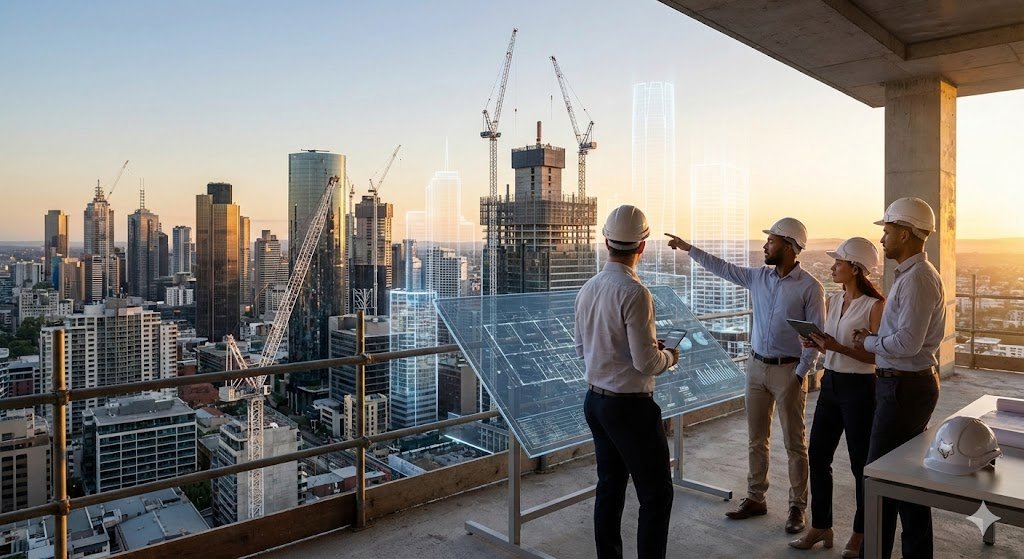
The Australian construction landscape is currently undergoing a metamorphosis of unprecedented scale. From the bustling, crane-filled horizons of Melbourne and Sydney to the critical infrastructure projects connecting our regional hubs, the nation is in a perpetual state of development. This sector serves as the backbone of the national economy, driving employment, innovation, and community growth. However, beneath the gleaming façades of new residential towers and the complex engineering of modern transport links lies a high-stakes environment fraught with challenges. Rising material costs, intricate supply chain disruptions, and an increasingly rigorous regulatory framework have transformed the simple act of building into a complex multidimensional puzzle.
In this volatile climate, the difference between a project that defines a skyline and one that falters in litigation or delays is rarely a matter of mere engineering capability. Instead, it comes down to the strategic oversight that guides the project from its initial feasibility phase to its final handover. As developers and investors look toward the future, the reliance on ad-hoc management styles is rapidly fading. The industry is waking up to a critical reality: the successful delivery of modern assets demands a level of precision, foresight, and adaptability that only expert construction project management can provide. This blog explores the deep intricacies of the Australian construction sector, the challenges facing today’s developers, and why professional consultancy is no longer a luxury, but a necessity for survival and success.
The Evolving Landscape of Australian Construction
To understand the necessity of high-level management, one must first appreciate the shifting terrain of the Australian built environment. We are no longer in an era where construction is simply about bricks and mortar. Today, it is about data, sustainability, legal compliance, and social license to operate.
The Pressure of Urbanisation and Infrastructure
Australia’s population is growing, and with it, the demand for sophisticated urban living spaces and robust infrastructure. Cities like Melbourne are densifying at rapid rates, requiring construction projects to navigate tighter footprints, heritage constraints, and complex neighbour relations. The sheer logistical challenge of building high-density structures in active urban environments requires a military level of planning—something that goes beyond standard contracting.
Economic Headwinds and Cost Volatility
The post-pandemic economy has introduced a new variable: extreme volatility. The cost of raw materials—timber, steel, concrete—fluctuates wildly based on global supply chains. Labour shortages in skilled trades have driven up wages and extended timelines. For a developer without a robust risk management strategy, these factors can erode profit margins overnight. This economic fragility underscores the need for a steady hand at the tiller, someone who can forecast potential budget blowouts before they occur and implement value engineering strategies to mitigate them.
The Core Pillars of Successful Project Delivery
Success in this niche does not happen by accident. It is the result of a disciplined adherence to the core pillars of project management. A specialized consultancy brings a structured methodology that integrates every facet of the build.
Strategic Planning and Feasibility Analysis
Long before the first sod is turned, the trajectory of a project is determined. The feasibility stage is perhaps the most critical moment in a project’s lifecycle. It involves rigorous stress-testing of the business case, analysing zoning laws, and understanding the environmental impact. Professional management firms utilize advanced modelling to predict the viability of a project, ensuring that investors are not pouring capital into a venture doomed by regulatory dead ends or financial impracticality.
Comprehensive Risk Mitigation
Risk is inherent in construction, but it need not be fatal. Whether it is latent ground conditions, inclement weather delays, or safety incidents, a project manager’s primary role is to act as a shield for the client. This involves creating a dynamic risk register that evolves with the project. By identifying high-risk activities early—such as deep excavations near existing structures or complex structural steel lifts—managers can enforce control measures that prevent costly downtimes.
Supply Chain and Stakeholder Management
A modern construction site is a convergence of hundreds of different businesses, from architects and engineers to specialized trades and material suppliers. Coordinating this symphony requires exceptional communication skills and contractual savvy. Delays in one sector can cascade through the entire program. Expert construction project management acts as the central nervous system of this operation, ensuring that communication flows seamlessly between stakeholders, that disputes are resolved quickly without stopping work, and that the supply chain remains aligned with the project’s critical path.
Why Expert Construction Project Management is Non-Negotiable
There remains a lingering misconception in some corners of the industry that project management is an added cost—a line item that can be minimized to save budget. This view is not only outdated but dangerous. The cost of poor management manifests in rework, safety breaches, and schedule overruns that far exceed the fee of a professional consultant.
When we talk about the “non-negotiable” nature of this service, we are referring to the assurance of quality and compliance. In Australia, the regulatory environment is one of the strictest in the world. With the introduction of new building commissioners and tighter scrutiny on building standards (particularly regarding cladding and structural integrity), the margin for error is zero. A professional management team ensures that every stage of the build is documented, inspected, and certified. They provide the “Golden Thread” of information that is now a legal requirement in many jurisdictions, ensuring that the history of the building’s construction is transparent and traceable.
Furthermore, the complexity of modern contracts requires an administrator who understands the legalities of the construction act. Managing progress claims, variations, and extensions of time requires a forensic attention to detail. Without expert construction project management, developers are often left vulnerable to invalid claims and contractual disputes that can stall projects for months.
Navigating the Regulatory Minefield in Melbourne and Beyond
Silver Fox Management operates in a landscape defined by its rigorous standards. Melbourne’s planning schemes, for instance, are notoriously complex, balancing the need for development with the preservation of the city’s unique character.
The Role of the Superintendent
In many standard construction contracts, the project manager acts as the Superintendent—an impartial role that requires administering the contract fairly between the client and the builder. This is a delicate balance. If the Superintendent is too lenient, the client loses money; if they are too harsh or unfair, the builder may walk off-site or sue. Navigating this relationship requires deep experience and a firm grasp of construction law.
Compliance and Safety Culture
Safety is paramount. The penalties for safety breaches in Australia are severe, including heavy fines and potential jail time for directors. A dedicated project management team enforces a safety culture that goes beyond ticking boxes. They ensure that safety management plans are not just documents on a shelf but are active, living practices on site. This protects the workers, the public, and the reputational integrity of the development company.
Sustainability and Innovation: Building for Tomorrow
The future of construction is green. Investors and tenants alike are demanding buildings that are energy-efficient, sustainable, and carbon-neutral. However, achieving a 5-Star Green Star rating or a high NABERS rating is not something that can be retrofitted at the end of a build. It must be woven into the fabric of the design and construction methodology.
Integrating Green Technologies
From solar-integrated facades to geothermal heating and cooling systems, the integration of new technology requires specialized knowledge. Project managers facilitate the collaboration between sustainability consultants and the construction team to ensure that these technologies are installed correctly and commissioned properly. They also manage the procurement of sustainable materials, ensuring that the “green” claims of suppliers are verified and legitimate.
Reducing Waste and Carbon Footprints
Efficient management leads to less waste. By optimizing the construction schedule and using just-in-time delivery systems, managers can significantly reduce the amount of material that ends up in landfill. Furthermore, by driving efficiency in the construction process itself—reducing the time heavy machinery is idling or minimizing transport movements—project managers contribute directly to lowering the embodied carbon of the project.
The Silver Fox Management Approach
In an industry often criticized for being adversarial, a collaborative approach stands out. Firms like Silver Fox Management exemplify the shift towards partnership-based construction consultancy. The philosophy here is that the project manager is not just an overseer, but a partner in the client’s success.
This approach is characterized by transparency. Clients are kept in the loop not just on progress, but on challenges. If a budget is coming under pressure, the conversation happens immediately, with solutions presented alongside the problem. This level of honesty builds trust and allows for agile decision-making.
Moreover, the boutique nature of specialized consultancies allows for a level of agility that larger, bureaucratic firms often lack. In the fast-moving Australian market, being able to pivot strategy quickly in response to a new government policy or a sudden market shift is a significant competitive advantage. This agility, combined with deep local knowledge of the Melbourne and broader Australian market, positions such consultancies as pivotal players in the built environment.
Conclusion: The Blueprint for Future Success
As we look toward the next decade of development in Australia, the challenges will only grow in complexity. Climate change resilience, population growth, and technological disruption will continue to test the limits of the construction industry. In this environment, the “she’ll be right” attitude of the past is insufficient. The projects that will succeed—the ones that will stand the test of time and deliver returns to their investors—will be those that prioritize professional governance.
Engaging a consultancy is an investment in certainty. It provides the assurance that costs will be controlled, quality will be maintained, and risks will be managed. Whether it is a boutique residential development or a large-scale commercial hub, the unifying factor for success is the presence of expert construction project management. It is the bridge between a vision on paper and a tangible reality in the skyline. For developers serious about their legacy and their bottom line, partnering with a dedicated management team is the most critical decision they will make.
Frequently Asked Questions (FAQ)
Q1: What is the primary role of a construction project manager? A: A construction project manager oversees the planning, design, and construction of a project, from its beginning to its end. They manage the budget, schedule, and quality, ensuring the project is delivered on time and within scope while mitigating risks.
Q2: Why is construction consultancy important in Australia? A: Australia has strict building regulations, high labour costs, and complex planning laws. Consultancy firms provide the expertise needed to navigate these legal and financial hurdles, ensuring compliance and preventing costly disputes.
Q3: How does project management save money? A: Through value engineering, strict budget control, and risk mitigation. By identifying potential problems early and enforcing contract terms, project managers prevent budget blowouts and expensive rework.
Q4: Can a project manager help with sustainability ratings? A: Yes. Project managers coordinate with sustainability experts to ensure design and construction methods meet specific standards like Green Star or NABERS, managing the procurement of eco-friendly materials and energy-efficient technologies.