
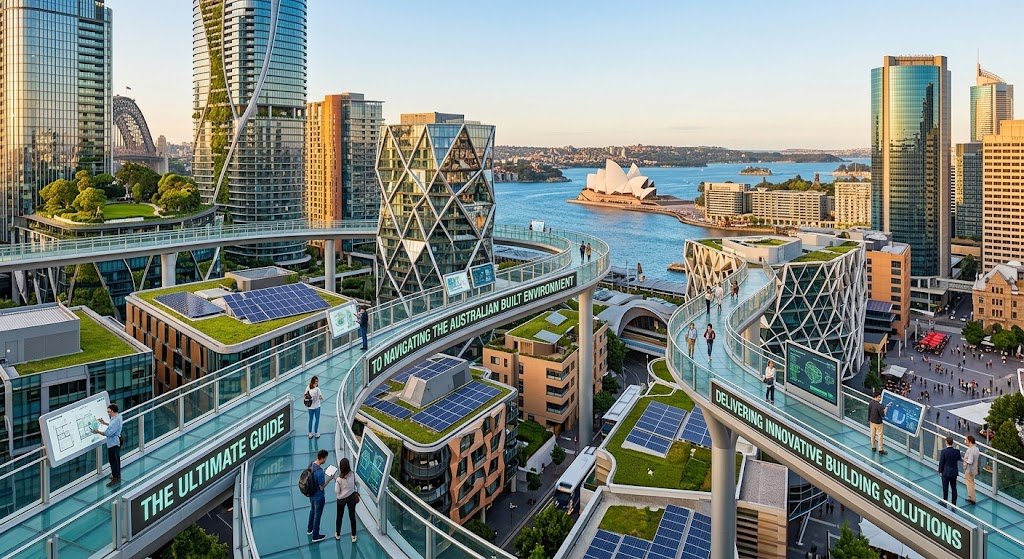
The Australian skyline is a vibrant, enduring testament to the nation’s unyielding economic ambition, cultural maturation, and exceptional engineering capabilities. From the heritage-laden, bustling commercial hubs of Melbourne’s inner suburbs to the rapidly expanding, resource-driven corridors reshaping regional Victoria, the physical fabric of the country is in a state of rapid metamorphosis. However, transforming a bold architectural concept into a completed, highly profitable physical asset is a journey fraught with immense risk and complexity.
Managing commercial, residential, and industrial infrastructure projects in this fast-paced climate requires far more than just financial capital and visionary architecture. In today’s economic and regulatory environment, the margin for error is razor-thin. It demands an intricate understanding of local markets, a highly strategic approach to resource allocation, and a commitment to unwavering quality control from the moment a project is conceptualized until the final keys are handed over. At the heart of any seamless build is expert construction project management, which serves as the foundational pillar for navigating the complex web of local regulations, supply chain challenges, and strict budgetary constraints.
In this comprehensive guide, we will explore the multifaceted nature of Australia’s modern construction and infrastructure sector. As a leading consultancy based in Flemington, Melbourne, Silver Fox Management has been transforming visions into reality since the 1990s. We will dissect the primary challenges facing developers today, outline the structural strategies required to master the built environment, and explain how partnering with seasoned professionals can secure your project’s commercial success.
The Evolution of Australia’s Construction Landscape
To fully appreciate the current state of the Australian construction sector, one must look at the historical context that has shaped modern development and the sheer scale of the projects currently underway across the continent. Decades ago, Australian urban centers were heavily localized, with clear delineations between commercial business districts and sprawling residential suburbs. Today, those traditional lines have permanently blurred. Driven by sustained population growth and the critical need to maximize land utility, urban densification has become the primary strategy for city planners. Mixed-use developments, towering residential skyscrapers, and heavily integrated transit hubs are now the absolute norm.
The Shift Towards High-Density Urban Densification
Building in these high-density areas introduces severe logistical constraints. Developers must execute deep excavations for multi-level basements in tightly constrained environments. This requires meticulous traffic management, intensive noise and vibration mitigation strategies, and hyper-precise scheduling to avoid disrupting the surrounding urban ecosystem. Coordinating concrete pours in the middle of a bustling central business district, for instance, requires a logistical ballet that leaves absolutely no room for amateur oversight.
The Expansion into Regional Growth Corridors
As cities expand outwards into previously undeveloped territories, developers are tasked with building entirely new communities from the ground up. This involves integrating essential services, vast retail spaces, and sustainable living environments into master-planned developments. This monumental scale of construction requires an architectural and administrative backbone that is both structurally resilient and endlessly adaptable to future demographic shifts.
What Does the Delivery Process Actually Entail?
Rising development costs, complex regulations, stringent sustainability requirements, and increasing stakeholder expectations have completely transformed the way projects are planned and delivered in Australia. So, what exactly does the process entail when you partner with a consultancy that has been operating at the highest level for decades?
It is the rigorous application of specialized knowledge, skills, tools, and techniques to manage an entire project lifecycle. A project requires the intricate management of resources, labor, materials, and heavy equipment while strictly ensuring adherence to all design specifications and safety regulations. Ultimately, it involves balancing three critical constraints:
- Time: Ensuring the project is delivered within the agreed schedule, minimizing costly delays that erode profit margins and frustrate stakeholders.
- Cost: Actively managing budgets, forecasting expenses, and avoiding cost overruns through highly strategic procurement and continuous value engineering.
- Quality: Complying with or exceeding architectural design, safety protocols, and long-term asset performance expectations.
A structured approach is much more than just monitoring a construction site. It is a strategic planning philosophy focused on solution-finding and stakeholder collaboration—bringing together trade contractors, clients, building designers, and local authorities to ensure a unified vision. Utilizing expert construction project management means anticipating issues before they occur and establishing frameworks that guarantee commercial certainty across every single phase of the build.
The Core Phases of a Successful Construction Project
At Silver Fox Management, our portfolio showcases a diverse range of projects, from sophisticated retail developments to specialized aged care facilities. This consistent excellence is achieved by adhering to a rigorous, phased approach to project delivery.
1. Project Initiation and Feasibility
Every successful project begins with a shared vision and a rigorous assessment of feasibility. During the initiation phase, we assemble all key stakeholders to model the core objectives and establish the profitability potential of the development. This involves conducting high-level environmental studies, preliminary geotechnical assessments, and market analyses. It is during this stage that the overarching project brief is compiled, defining the exact scope of work and the expected deliverables. Without a rock-solid foundation in the initiation phase, a project is vulnerable to scope creep and financial instability later on.
2. Comprehensive Planning and Design
Once a project is deemed feasible, it moves into the critical planning and design phase. This is where conceptual designs are translated into highly detailed, compliant working drawings. Our development consultancy experts provide strategic insights and guidance, helping developers navigate the complexities of local council zoning laws and heritage overlays. We identify project risks and prepare robust strategies to mitigate them. Timelines are established, budgets are locked in, and the procurement strategy is finalized. Effective planning ensures that competitive pricing is secured without ever compromising the quality of the final asset.
3. Execution and Construction Phase
The execution phase is where the architectural vision physically takes shape. This phase requires constant, authoritative leadership on-site. Our team oversees the coordination of all trades, ensuring that structural engineers, electricians, plumbers, and carpenters are working in perfect harmony. We manage the day-to-day logistics, from site inductions and safety briefings to the delivery and safe storage of heavy materials. In today’s climate of localized supply chain disruptions, an agile approach to execution is vital to keep the build progressing on schedule.
4. Monitoring, Controlling, and Quality Assurance
Running parallel to execution is the continuous process of monitoring and controlling. In the relentless, high-pressure rush to meet tight delivery deadlines, there is often a dangerous temptation to cut corners. However, compromised quality in the built environment can lead to catastrophic consequences. We establish clear, universally understood, and highly measurable quality benchmarks at the outset of the project. Our team conducts systematic, independent inspections at every critical construction milestone to ensure absolute compliance with the structural plans.
5. Project Closure and Handover
The final stage is project closure, a meticulous process that guarantees the completed asset is ready for occupation or operation. This phase involves a comprehensive final walkthrough, the completion of all punch-list items, and the rigorous testing of all building systems (such as commercial HVAC, electrical grids, and plumbing). We manage the complex administrative handover, ensuring that all compliance certificates, warranties, and as-built drawings are seamlessly transferred to the client. A professional handover protects the developer’s reputation and ensures the long-term operational success of the building.
Navigating the Labyrinth of Regulatory Compliance
One of the most formidable and time-consuming challenges in the Australian construction industry is navigating the incredibly complex web of regulatory frameworks. The legal landscape governing the built environment is vast, stringent, and subject to constant legislative updates.
The National Construction Code (NCC)
The National Construction Code (NCC) sets the absolute minimum standard for safety, health, amenity, and sustainability in the design and construction of new buildings throughout all states and territories in Australia. Recent updates to the NCC have introduced even stricter, highly technical requirements regarding energy efficiency, disability accessibility, and advanced fire safety systems. Ensuring complete compliance with these evolving codes requires a proactive, highly educated approach from the very beginning of the schematic design phase.
Local Heritage and Environmental Overlays
Beyond the national code, developers must carefully navigate a labyrinth of local municipal council zoning laws, state-based environmental protection regulations, and fiercely guarded heritage conservation overlays. In heritage-rich cities like Melbourne, integrating modern, high-density developments into historically significant sites requires a delicate, highly technical, and deeply respectful approach. Facade retention, underpinning historical foundations, and managing the delicate balance between the old and the new requires supreme technical skill. Failure to adhere to these strict localized regulations can result in severe financial penalties and protracted legal disputes in planning tribunals.
Strategic Risk Mitigation in a Volatile Market
Risk is an inescapable component of any large-scale infrastructure or commercial construction project. From unforeseen geotechnical issues discovered deep underground during initial excavation to sudden changes in government zoning policy and extreme weather events that halt site operations, the variables that can derail a project are practically endless.
Overcoming Supply Chain Disruptions
The global supply chain disruptions experienced in recent years have left a profound and lasting impact on the Australian built environment. The industry continues to grapple with localized shortages of essential building materials, including structural timber, specialized structural steel, raw cement, and high-tech electrical components. To navigate this highly unpredictable landscape, modern procurement strategies must be incredibly agile. Developers must forward-order critical materials months in advance and aggressively diversify their supplier networks. By leveraging expert construction project management, property developers and investors can proactively identify potential vulnerabilities at the earliest possible stage, accurately quantify their potential financial impact, and logically sequence their delivery to prevent site bottlenecks.
Financial Oversight and Protecting Margins
In a macroeconomic climate characterized by tightened lending criteria and sustained high interest rates, financial scrutiny from private investors and institutional lending bodies is at an all-time high. Stakeholders demand meticulous financial planning, transparent real-time reporting, and rigorous cost-tracking mechanisms throughout the entire lifecycle of a build. Comprehensive financial oversight ensures that every single dollar spent is accurately accounted for, scope variations are strictly controlled, and value engineering is applied strategically to reduce overall costs without cheapening the aesthetic.
Why Sustainability Matters in Modern Builds
Sustainability is no longer a niche concept or an optional add-on designed to generate positive public relations. It is a fundamental, non-negotiable imperative in the modern Australian construction sector. With a rapidly growing global awareness of climate change and ecological degradation, there is an industry-wide mandate to adopt carbon-neutral construction methodologies and highly energy-efficient building designs.
Achieving Green Star and NABERS Certifications
Forward-thinking developers are increasingly targeting exceptional ratings from recognized environmental certification bodies, such as the Green Star rating system and NABERS (National Australian Built Environment Rating System). Achieving these prestigious certifications requires a deeply integrated approach from day one. It encompasses everything from sourcing low-emission building materials to implementing smart building technologies that autonomously optimize energy consumption, water usage, and waste management once the building is fully operational.
Integrating Eco-Friendly Practices
Transitioning to genuinely sustainable building practices introduces new complexities into the design and procurement phases. At Silver Fox Management, we integrate eco-friendly practices and materials into every project, promoting long-term sustainability without ever compromising on quality or aesthetics. From managing the procurement of highly efficient fixtures and equipment to ensuring contractors strictly adhere to environmental management plans on-site, our comprehensive oversight guarantees that sustainability is woven into the very fabric of the build.
The Digital Revolution: Transforming Construction Methodologies
The construction industry, historically known for its slow adoption of new technologies and heavy reliance on traditional, paper-based methodologies, is currently undergoing a massive, highly disruptive digital transformation. To remain competitive and maximize on-site efficiency, developers must fully embrace the technological revolution sweeping across the global built environment.
Leveraging Building Information Modeling (BIM)
Building Information Modeling (BIM) has fundamentally revolutionized the way complex infrastructure projects are designed, visualized, and executed. By creating highly detailed, multi-dimensional digital representations of a building’s physical and functional characteristics, BIM allows architects, structural engineers, and builders to proactively detect spatial clashes and resolve critical design conflicts in the virtual realm long before physical construction begins. This intelligent foresight significantly reduces costly physical rework, dramatically lowers material waste, and accelerates the overall construction timeline.
AI, Digital Twins, and Advanced Tracking
Beyond the profound impacts of BIM, the rapid integration of artificial intelligence (AI), machine learning algorithms, and advanced tracking technology is completely reshaping day-to-day on-site operations. Digital tracking tools provide real-time, high-resolution progress updates, allowing stakeholders to monitor development remotely with unparalleled accuracy. Meanwhile, modern project management software can actively analyze massive historical datasets to predict potential supply chain delays, dynamically optimize construction scheduling, and substantially enhance worker safety protocols by identifying hazard patterns before accidents occur.
Addressing the Human Element: The Industry Skills Shortage
Alongside ongoing supply chain volatility and tightening economic pressures, the Australian construction sector is currently facing a critical, systemic shortage of skilled labor. From highly specialized tradespeople and heavy machinery operators to experienced site managers, commercial contract administrators, and structural engineers, the demand for qualified professionals far outstrips the available domestic supply across all states and territories.
Fostering Collaborative Site Cultures and Retaining Talent
This severe talent deficit poses a significant, ongoing threat to project timelines, build quality, and site safety. Addressing this challenge requires a deeply strategic approach to human resource management and subcontractor procurement. Developers must actively foster stronger partnerships with top-tier contracting firms to secure labor well in advance of the project commencement date.
In the immediate term, project leaders must focus relentlessly on maximizing the efficiency of their existing workforce. This involves streamlining site workflows, aggressively minimizing operational downtime, and heavily utilizing prefabrication and modular construction techniques where appropriate to drastically reduce the sheer volume of on-site labor required. Furthermore, fostering a positive, exceptionally safe, and highly collaborative site culture is absolutely essential for attracting and retaining the best subcontractors in a fiercely competitive, candidate-driven labor market. At Silver Fox Management, our long-standing relationships with Melbourne’s best trades ensure our sites are continually manned by reliable, highly skilled professionals.
The Silver Fox Management Difference: Decades of Excellence
Located at 33 Marshall St, Flemington, Silver Fox Management has evolved into a leading force in the Melbourne construction industry. Our legacy is built on a foundation of trust, collaboration, and an unwavering commitment to client satisfaction. We believe that every successful project begins with a shared vision and a client-centric approach that ensures your goals are at the absolute forefront of our operations.
Our capability is driven by a highly skilled team of industry veterans. As our founding director, Stuart King brings a lifetime of construction experience, having worked extensively with Melbourne’s Tier-Two construction companies. Specializing in client-side project management, Stuart drives projects from inception, through feasibility, masterplanning, and permit approvals, all the way to successful completion. Working alongside him is Andrew King, whose extensive on-site and off-site experience across all areas of commercial construction allows him to masterfully manage our construction work and day-to-day site activities.
The architectural and design strength of our consultancy is spearheaded by Nick Hughes, our licensed in-house architect. Nick acts as the principal superintendent on our complex Aged Care and retail development projects, expertly driving our design and construct portfolio. Complementing the structural design is Louise Cain, who brings unparalleled interior design expertise to the team. Louise manages the complex FF&E (Furniture, Fixtures, and Equipment) procurement for our projects, specializing in Aged Care and institutional interior fit-outs. From handling selections, delivery, and installations to managing contract letting, her meticulous attention to detail ensures the final product is both beautiful and highly functional.
This cohesive synergy between structural oversight, architectural brilliance, and interior design procurement allows Silver Fox Management to offer a truly end-to-end service, securing commercial certainty for our clients.
Conclusion: Securing Your Commercial Certainty
The Australian built environment is a thrilling, highly dynamic sector that offers immense financial and legacy rewards for those who possess the capability to navigate its myriad challenges with profound skill, strategic foresight, and unwavering precision. From successfully overcoming global supply chain shortages and expertly managing escalating material costs to championing sustainable, green building practices and seamlessly integrating the absolute latest technological advancements, the modern developer faces a daily, high-stakes gauntlet of operational challenges.
However, with the right structural strategies, rigorous planning, and professional guidance firmly in place, these formidable challenges can be seamlessly transformed into extraordinary opportunities for market innovation and enduring architectural excellence. The absolute key to unlocking this vast potential lies in meticulous, data-driven pre-construction planning, highly proactive risk management, and uncompromising, independent quality control at every single stage of the build.
The modern Australian skyline is no place for guesswork, unchecked risk, or misaligned stakeholder objectives. Investing in expert construction project management is not just a tactical decision; it is the ultimate, non-negotiable safeguard for your capital investment, your project timeline, and your long-term industry reputation.
If you are ready to transform your vision into reality with unmatched expertise and precision, we invite you to connect with Silver Fox Management. Reach out to Stuart and the team at stuart@silverfoxmanagement.net or call us directly at 0447 221 044 to begin building a future rooted in innovation, sustainability, and unparalleled commercial success.