
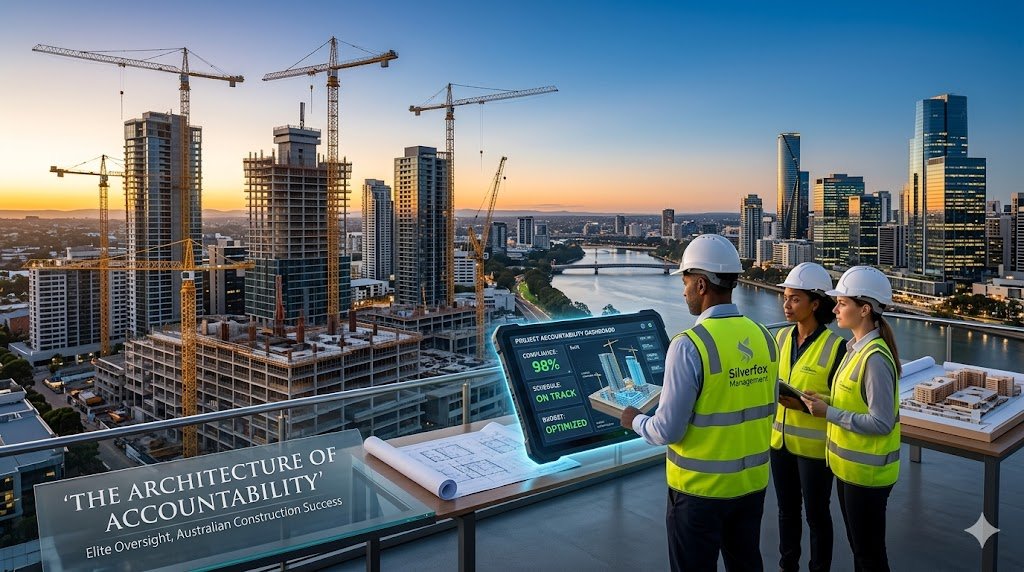
The Australian skyline serves as a dynamic, ever-evolving canvas that vividly illustrates the nation’s economic ambition, cultural maturation, and exceptional engineering capabilities. From the heritage-laden, bustling commercial hubs of the Melbourne and Sydney central business districts to the rapidly expanding, resource-driven corridors reshaping regional Victoria, Queensland, and Western Australia, the physical fabric of the country is in a constant, rapid state of transformation. Multi-billion-dollar infrastructure pipelines, towering mixed-use commercial developments, and sprawling, high-density residential precincts are fundamentally altering how Australians interact with their cities and regional centers.
However, the journey from an ambitious, visionary architectural concept to a completed, structurally sound, and financially viable reality is fraught with immense, multi-layered complexity. As modern projects grow exponentially in scale, technical sophistication, and capital requirement, the acceptable margin for error shrinks to near zero. Attempting to navigate Australia’s labyrinthine building regulations, heavily disrupted global supply chains, and highly fragmented stakeholder environments without specialized, strategic guidance is a profound financial gamble. In this high-stakes environment, the integration of expert construction project management transitions from a perceived luxury to an absolute, non-negotiable necessity for property developers and institutional investors aiming for long-term commercial success.
1. The Shifting Sands of the Australian Built Environment
To truly comprehend the absolute necessity of independent project oversight, one must first deeply examine the current, highly volatile state of Australia’s construction and infrastructure sector. This industry is currently experiencing a metamorphosis of an unprecedented scale, acting as the formidable, load-bearing backbone of the national economy. It drives massive employment figures, fosters rapid technological innovation, and catalyzes vital community growth across both metropolitan centers and regional frontiers.
1.1 Macro-Economic Pressures and Infrastructure Booms
Both federal and state governments have committed record, historically unprecedented funding to massive infrastructure pipelines over the coming decades. These sweeping initiatives aim to stimulate sustained economic growth, drastically improve interstate logistics, and accommodate a rapidly expanding population that increasingly demands world-class, integrated facilities. Simultaneously, the private sector is heavily, aggressively investing in sprawling urban renewal precincts, build-to-rent (BTR) models, and towering high-density residential blocks to meet critical housing demands.
Yet, this incredible boom brings its own set of intense, unique pressures. A saturated, hyper-active market inevitably leads to severe competition for essential resources. The fight for top-tier, reliable labor and reputable principal contractors is fiercely contested. When highly skilled tradespeople are in high demand, project timelines are immediately put at severe risk of blowout, and labor costs surge, threatening initial feasibility studies.
1.2 The Global Supply Chain Paradox
Furthermore, the Australian construction sector is heavily reliant on complex global supply chains for specialized, high-grade materials. This reliance ranges from basic structural steel framing and customized curtain-wall glazing to highly advanced HVAC components, high-speed elevator shafts, and smart-building environmental sensors.
Global economic fluctuations, international shipping delays, localized port strikes, and geopolitical tensions can completely disrupt these fragile supply lines overnight. A delayed shipment of custom facade panels or specialized electrical switchboards can leave a local construction site at a devastating, costly standstill for weeks. Without a dedicated management team possessing the strategic foresight to implement agile, robust contingency plans and alternative procurement strategies, these external macroeconomic pressures can instantly derail a development.
2. Deconstructing the Traditional Delivery Model
Historically, many developers relied on a relatively simple, tripartite procurement model: the financier, the lead architect, and the principal building contractor. The prevailing assumption was that once a lump-sum or design-and-construct contract was signed, the builder would naturally manage all site efficiencies, seamlessly mitigate all risks, and enthusiastically deliver the project on time and on budget. In the modern era of hyper-complex mega-builds, this traditional model is demonstrating severe, critical fractures that threaten the viability of major investments.
2.1 The Inherited Conflict of Interest
The fundamental flaw in this traditional approach lies in the inherent, unavoidable conflict of interest. A principal contractor’s primary, overriding commercial motivation is to fulfill their specific contractual obligations as quickly and cost-effectively as possible to maximize their own internal profit margins. Conversely, the developer’s sole motivation is to protect and maximize their overall Return on Investment (ROI), ensuring the highest possible build quality, strict adherence to the architectural vision, and absolute, uncompromising regulatory compliance.
When unexpected challenges arise on-site—as they inevitably do in any major earthworks or vertical build—these differing motivations lead to severe friction. A builder might suggest a “cost-saving” variation that subtly degrades the aesthetic quality of the lobby or propose rushing a waterproofing stage to meet a milestone payment. An independent consultancy team serves as the developer’s dedicated, fiercely loyal representative on the ground. They are not burdened by the financial pressures of the physical build; their sole mandate is to protect the developer’s interests and ensure the builder’s methodologies perfectly align with the project’s ultimate commercial goals.
2.2 The Silo Effect Among Stakeholders
A major commercial, residential, or civil infrastructure development is not executed by a single cohesive entity. It is built by a vast, highly fragmented network of disparate stakeholders. A standard tier-one project involves equity investors, strict debt financiers, lead architects, specialized structural, civil, and acoustic engineers, principal building contractors, dozens of highly specialized subcontractors, local council planning authorities, and state regulatory bodies.
Often, these diverse groups operate in heavily fortified professional silos. They speak entirely different technical languages, prioritize wildly different project outcomes, and frequently possess conflicting agendas. When these silos are left unmanaged, communication inevitably breaks down, leading to mismatched expectations, expensive on-site rework, and a hostile, unproductive working environment.
3. The Financial Imperative: Protecting ROI Through Strategic Foresight
From the perspective of a developer, an equity partner, or an institutional investor, the primary, overriding objective is to maximize the final financial return. In the early stages of budget allocation, it can be highly tempting to view specialized, third-party oversight as an unnecessary, redundant line-item expense. However, this is a fundamentally flawed, short-sighted approach to modern construction economics that frequently leads to disaster.
The harsh financial reality is that the upfront cost of dedicated oversight is absolutely minuscule compared to the catastrophic, business-ending financial hemorrhaging caused by unmanaged project delays, protracted contractual disputes, and extensive structural rework. When deployed correctly, expert construction project management serves as the ultimate financial safeguard, providing an exceptional return on investment simply by preventing worst-case scenarios and aggressively optimizing site efficiencies.
3.1 Redefining Strategic Value Engineering
One of the most powerful, financially impactful tools deployed by an expert consultancy is the practice of strategic value engineering. It is vital to clarify that true value engineering is emphatically not the practice of mindlessly cutting corners, slashing budgets, or substituting dangerously inferior materials to save a quick dollar. Such reckless cost-cutting inherently degrades the final quality, safety, and lifespan of the asset, ultimately damaging the developer’s brand.
True, professional value engineering involves a profound, highly systematic analysis of the project design to identify innovative alternative methodologies, superior logistical approaches, or more highly efficient material usages that drastically reduce costs without compromising quality. Whether it involves altering a basement foundation design to significantly reduce excavation time in rocky terrain, sourcing an alternative, fully compliant cladding material that meets strict fire-safety codes at a fraction of the price, or radically redesigning an HVAC layout for greater long-term energy efficiency, strategic value engineering can save developers literally millions of dollars before the first cubic meter of concrete is ever poured.
3.2 Commanding the Critical Path
In the fast-paced, high-stakes world of property development, time is unequivocally and inextricably linked to money. Every single day a project extends beyond its scheduled, contracted completion date represents a massive, unrecoverable financial loss. Developers are hit with extended capital financing costs, compounding interest, ongoing site holding charges, land taxes, and the severe opportunity cost of delayed rental yields or finalized sales income.
Professional oversight teams completely master time through the rigorous application of advanced project management software and strict Critical Path Methodologies (CPM). They meticulously map out every single, minute dependency within the complex construction timeline. They identify the “critical path”—the exact, unalterable sequence of tasks that strictly dictate the final completion date—and focus intense, unwavering management resources on ensuring these specific tasks are never, ever delayed. This relentless focus on scheduling is what definitively guarantees a project is delivered to the market exactly when promised.
4. Navigating the Modern Regulatory Minefield
Adding significantly to the physical and logistical complexities of building is Australia’s notoriously rigorous, heavily bureaucratic regulatory environment. The days of relaxed building standards and self-certification loopholes are long gone, replaced by a hyper-vigilant, uncompromising compliance landscape.
4.1 The Evolution of the National Construction Code (NCC)
The National Construction Code (NCC) is a living, breathing document, constantly updated with far stricter, non-negotiable mandates regarding structural integrity, fire safety protocols, acoustic performance, and thermal energy efficiency. Recent legislative updates have introduced sweeping, comprehensive changes to compliance requirements.
The legacy of international and domestic cladding crises has resulted in uncompromising standards for exterior materials and structural fire resistance. Furthermore, recent NCC updates have introduced complex new requirements for livable housing design, advanced condensation management, and highly stringent energy efficiency ratings (such as the push toward 7-star NatHERS ratings for residential builds). These updates fundamentally alter how residential and commercial spaces must be planned, engineered, and executed.
4.2 Managing Heritage and Cultural Overlays
Navigating the dense intricacies of local council zoning laws, securing highly complex, multi-stage planning permits, and adhering to strict environmental impact assessments require a deep, highly specialized understanding of bureaucratic processes. For projects located in historical, culturally significant precincts—such as the heritage-rich inner suburbs of Melbourne or the historic districts of Sydney—the regulatory hurdles are exponentially higher.
Developers in these zones must perform a delicate, legally perilous balancing act: modernizing critical infrastructure and maximizing profitable commercial floor space while strictly, rigorously preserving heritage facades and adhering to inflexible cultural overlay restrictions. Attempting to navigate this bureaucratic labyrinth without specialized guidance frequently results in prolonged, disastrous stop-work orders, costly legal disputes with local authorities, and severe brand damage to the developer. Independent consultants plot a clear, legally sound pathway through this maze, managing council relationships and ensuring seamless compliance from the initial development application through to final occupancy certification.
5. The Non-Negotiable Demand for Future-Proof Assets
As we look toward the future of the Australian built environment, it is abundantly clear that environmental sustainability is no longer an optional “add-on” or a fringe, feel-good marketing tactic; it is a core, unavoidable commercial imperative. A massive, undeniable seismic shift has occurred in the Australian property market. Institutional investors, high-value government tenants, and increasingly environmentally conscious consumers are demanding assets that demonstrate exceptional, verifiable environmental performance.
5.1 Securing Green Star and NABERS Ratings
High Green Star ratings and excellent, independently audited NABERS (National Australian Built Environment Rating System) scores are now absolute, non-negotiable prerequisites for premium asset valuations and attracting tier-one corporate tenants. However, achieving these coveted, highly complex sustainability benchmarks is incredibly difficult.
It requires the seamless, flawless integration of passive solar design, ultra-high-performance acoustic and thermal glazing, massive rainwater harvesting and recycling systems, and the heavy incorporation of renewable energy sources. Furthermore, the push for the complete electrification of buildings—moving away from legacy gas infrastructure—requires entirely new approaches to base-building design and energy load management.
5.2 The Smart Building Revolution
Modern buildings must function as interactive, “smart” ecosystems, utilizing highly automated Building Management Systems (BMS) to continually optimize energy consumption, monitor indoor air quality, and manage physical security in real-time. Integrating these advanced, sensitive technologies requires meticulous, hawkish oversight during both the intricate design phase and the messy, chaotic physical installation phase.
If smart sensors are incorrectly wired by a rushed electrical subcontractor, or if sustainable, low-carbon materials are quietly substituted with non-compliant, cheaper alternatives, the entire environmental rating of the building can be severely jeopardized. It is here that expert construction project management proves invaluable, ensuring that ambitious ESG (Environmental, Social, and Governance) targets are fiercely protected, guaranteeing that the final asset is completely future-proofed, legally compliant, and highly competitive in a rapidly evolving, eco-conscious global market.
6. Neutralizing Litigation and Protecting Project Momentum
It is an unfortunate, inescapable reality that the construction sector is highly notorious for its staggering rates of litigation, arbitration, and bitter contractual disputes. The traditional, deeply entrenched adversarial relationship between developer and builder often leads to a hostile, toxic site environment. When immense amounts of capital are at stake, every weather delay, every minor design ambiguity, or every request for a site variation becomes a vicious battleground for financial claims and counter-claims under legislation such as the Security of Payment Act.
These destructive disputes poison site culture, completely destroy project momentum, and consume vast, unjustifiable amounts of capital in legal and adjudication fees. A successful project relies heavily on a rigorous, objective framework to neutralize these opportunistic claims before they escalate to the courts.
Because third-party oversight professionals are intimately, daily involved in the project’s documentation, site diaries, and progress reports, they possess the indisputable, legally sound factual evidence required to immediately shut down baseless variations or unjustified Extension of Time (EOT) claims. Simultaneously, they ensure that legitimate, unavoidable claims are resolved fairly, transparently, and incredibly rapidly. By enforcing the strict, written terms of the contract while fostering a collaborative site environment based on strict accountability rather than finger-pointing and blame, they keep the project constantly moving forward toward successful completion.
Conclusion
Building the future of Australia is a monumental, awe-inspiring task. As our metropolitan cities grow taller, our critical infrastructure stretches further across the vast, challenging continent, and our environmental and safety standards become rightfully more exacting, the old, traditional ways of managing construction are simply no longer sufficient. The outdated reliance on handshake agreements, overly optimistic timelines, and reactive, last-minute problem-solving is a guaranteed recipe for spectacular commercial failure in the modern, highly complex built environment.
To truly master the built environment and secure long-term profitability, developers must elevate their entire approach. Construction must be treated not merely as a brute-force physical process of assembling raw materials, but as a highly complex, refined corporate operation requiring elite, uncompromising strategic management from the moment of inception to final handover.
Ultimately, the true, enduring architecture of success lies in the robust systems, the unbreakable processes, and the highly skilled people who carefully guide a project through the chaos of construction. For developers and institutional investors who wish to leave a lasting, highly profitable legacy on the Australian skyline, investing in expert construction project management is the most critical decision they will make. It is the definitive, proven blueprint for successfully transforming grand architectural ambition into an enduring, magnificent, and highly lucrative structural reality.