
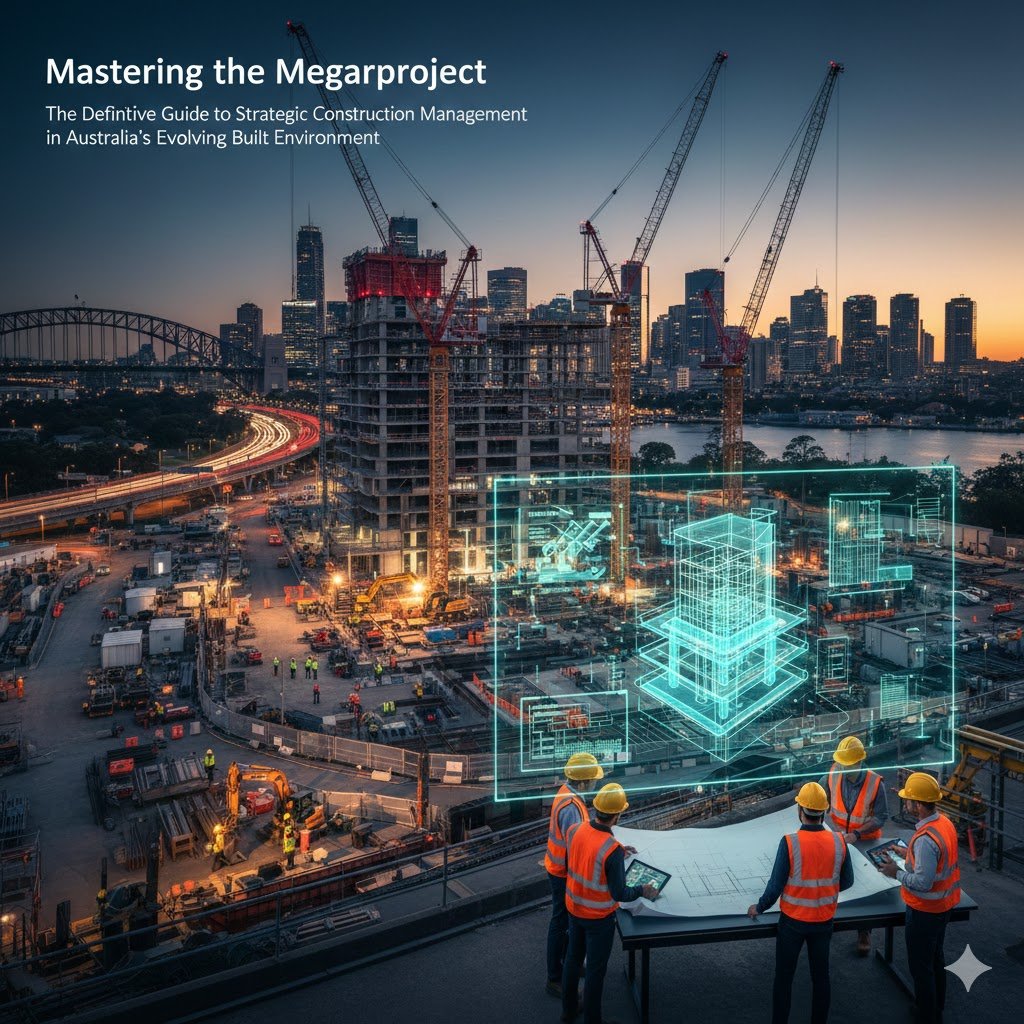
The Australian skyline is a dynamic tapestry, a testament to relentless ambition and complex engineering. From the critical infrastructure linking regional hubs to the soaring residential and commercial towers that define our major metropolitan centres, the construction industry acts as a crucial engine for national growth and prosperity. Yet, this high-stakes environment is simultaneously navigating an era of unprecedented challenge. Rising material costs, tightening labor markets, stringent safety and environmental regulations, and the constant pressure of stakeholder expectations converge to create a minefield of potential risks for any project, regardless of size.
In this context, successful project delivery has become less about technical construction skill and more about strategic project management. It is the comprehensive, holistic oversight provided by expert construction project management that ultimately transforms a blueprint into a functional, sustainable, and profitable asset. For firms navigating the unique demands of the Australian built environment, securing expert guidance is not a luxury; it is the fundamental cornerstone of achieving project success, mitigating financial exposure, and delivering future-proof outcomes. This 2000-word deep dive explores the non-negotiable strategic imperatives that define excellence in Australian construction project delivery and the indispensable role of expert consultancy.
The Imperative of Expert Project Leadership in a Complex Landscape
The complexity inherent in modern Australian construction—often involving multinational supply chains, multi-jurisdictional approvals, and immense capital expenditure—demands a level of expertise that extends far beyond traditional site supervision. Today’s project manager must operate as a true business strategist, navigating legislative nuances, financial models, and technological integration simultaneously.
Navigating Regulatory Complexity and Approvals
Australia’s regulatory landscape is notoriously intricate and constantly evolving. Each state and territory maintains unique planning, environmental, and building codes. For major projects, this means navigating a labyrinth of local council permits, state-level environmental impact assessments, and national safety standards.
Expert construction project management provides the necessary foresight to anticipate regulatory shifts and manage the approvals process proactively, rather than reactively. This involves establishing critical milestones for compliance early in the planning phase, ensuring that due diligence extends not only to engineering feasibility but also to legislative adherence. Failure to master this area can lead to costly delays, project scope creep, and, in severe cases, the suspension of works. An experienced management team serves as the centralized intelligence hub, translating complex legal obligations into executable project tasks and safeguarding the client against unforeseen regulatory hurdles.
Mitigating Supply Chain Risk and Cost Volatility
The global economic climate has dramatically amplified risk within construction supply chains, particularly in a market like Australia which relies significantly on global sourcing. Price volatility for key materials (steel, timber, concrete) and logistics bottlenecks have become standard challenges, eroding profit margins and jeopardizing schedules.
A strategic approach to project management involves sophisticated, active supply chain risk mitigation. This means identifying critical path materials, establishing buffer stock strategies, and, crucially, locking in procurement contracts early with rigorous escalation clauses. It also means fostering relationships with a diversified supplier base, seeking local alternatives where possible, and utilizing modern technology to track material movements and predict lead time changes. Effective project managers treat the supply chain not as a given, but as a dynamic risk area requiring constant management and proactive contingency planning to ensure the project remains financially viable.
Foundational Pillars of Successful Australian Construction Project Management
The difference between a stalled, over-budget build and a project delivered on time and within scope is typically found in the robustness of its foundational planning. Excellence in the Australian construction project management field rests on established pillars of strategic foresight and control.
Strategic Planning and Due Diligence (The Pre-Construction Phase)
The success of any building endeavor is often determined long before the first shovel hits the ground. The pre-construction phase—encompassing feasibility studies, detailed cost planning, value engineering, and final design—is the most critical window for shaping project outcomes.
Expert project management teams leverage this period to challenge assumptions, optimize design for constructability, and establish a bulletproof baseline budget. Value engineering goes beyond simply reducing costs; it focuses on maximizing the functional value of the project while eliminating unnecessary expenditure. This includes conducting rigorous lifecycle cost analysis, ensuring that initial capital savings do not translate into higher long-term operational costs for the asset owner. Comprehensive due diligence at this stage identifies and addresses site-specific geotechnical, environmental, and heritage issues that could derail execution later on, ensuring the project starts on the strongest possible footing.
Advanced Risk Management Frameworks
Construction is inherently risky, involving complex interplay of factors like worker safety, financial exposure, legal liability, and technical failure. A professional project management service deploys a comprehensive risk management framework that is iterative and integrated into every stage of the project lifecycle.
This framework involves:
- Identification: Systematically brainstorming and cataloging all potential risks (e.g., weather events, industrial disputes, material price spikes).
- Analysis: Quantifying the probability and potential impact of each risk on time and cost (using tools like Monte Carlo simulations for schedule risk).
- Response Planning: Developing clear mitigation (reducing the probability/impact), transfer (insurance/contract clauses), or acceptance strategies for each major risk.
For Australian construction project management, risk management must be particularly sharp regarding WHS (Work Health and Safety), a non-negotiable legal and ethical obligation. The project manager is responsible for establishing a safety culture and ensuring that all contractors adhere to the highest standards, protecting both human life and the client’s reputation.
Technological Integration and Digital Transformation
The digital revolution is reshaping construction from a historically low-tech industry into one driven by data and connectivity. Leveraging cutting-edge technologies is now essential for maintaining a competitive edge and meeting the demands for precision, efficiency, and transparency.
Leveraging BIM (Building Information Modeling) for Collaboration
Building Information Modeling (BIM) has moved beyond a niche design tool to become a core project management platform. BIM creates a shared, intelligent 3D model that acts as a single source of truth for the entire project team—architects, engineers, contractors, and owners.
Expert use of BIM enables:
- Clash Detection: Identifying design conflicts (e.g., mechanical systems interfering with structural elements) before construction begins, saving massive amounts of time and rework costs on site.
- 4D and 5D Modeling: Integrating time (4D) and cost (5D) data directly into the model, allowing the project manager to visualize the construction sequence and track earned value against planned expenditure with unparalleled accuracy.
- Improved Collaboration: Providing all stakeholders with real-time access to the latest design iterations, minimizing errors stemming from outdated drawings and documents.
The Role of Data Analytics in Predictive Project Control
Beyond modeling, data analytics is transforming project control. Modern projects generate immense volumes of data—from IoT sensors tracking equipment usage and site conditions to financial data streams from accounting systems.
Project management experts utilize advanced analytics to move from reactive reporting (detailing what has happened) to predictive control (forecasting what will happen). For instance, analyzing historical project performance data combined with current progress metrics allows a manager to accurately predict the completion date and final cost based on current trends, enabling intervention before a deviation becomes a crisis. This forward-looking capability is crucial for providing clients and stakeholders with transparent, evidence-based progress updates.
The Mandate for Sustainability and Social Responsibility
The contemporary Australian client base, alongside government and community stakeholders, increasingly demands that construction projects meet high standards of environmental sustainability and contribute positively to the local community. Project managers must embed these priorities into the very DNA of the project.
Achieving Green Star and High-Performance Building Standards
The drive toward net-zero buildings and climate resilience necessitates specialized knowledge in sustainable design and construction methods. This involves integrating systems and materials that reduce the operational carbon footprint of the finished asset, such as high-efficiency HVAC, rainwater harvesting, and renewable energy generation.
Expert project management teams guide the project through internationally recognized standards like Green Star or WELL Building certification. This involves meticulous tracking and documentation of material sourcing (prioritizing low-embodied carbon materials), waste management protocols, and construction practices that minimize site disruption and pollution. A focus on sustainability is not just an environmental choice; it is a financial one, as energy-efficient buildings command higher tenancy rates and lower operating expenses over their lifecycle.
Stakeholder Engagement and Community Impact Management
Large-scale construction projects inevitably impact local communities—through noise, traffic, and access changes. Neglecting community concerns can lead to significant delays caused by protests, legal challenges, or negative public sentiment that impacts necessary approvals.
A robust Australian construction project management strategy includes a proactive, continuous, and transparent stakeholder engagement plan. This involves establishing clear lines of communication with local residents, businesses, and government bodies; providing timely updates; and addressing concerns directly and empathetically. Effective community management minimizes friction and transforms potential opposition into tacit support, ensuring the project maintains its social license to operate.
Silver Fox Management: The Consultancy Difference in Delivery
For construction clients in Australia, partnering with an independent, experienced project management consultancy is the defining decision that secures project predictability and success. Silver Fox Management stands apart by offering a blend of deep local knowledge—critical for navigating the specific legislative and market complexities of the Australian built environment—and international best practices in strategic execution.
Driving Value Through Independent Expertise
As independent consultants, firms like Silver Fox Management provide impartial guidance. They operate solely in the client’s best interest, free from the conflicts of interest that can arise when construction management is embedded within contracting firms. This independence is crucial in value engineering, procurement oversight, and contractor negotiation, ensuring that every dollar spent maximizes the client’s return on investment.
A Future-Focused Approach to Australian Construction Project Management
The future of construction is digital, sustainable, and highly regulated. Our team ensures that client projects are not just completed but are built to thrive in this future environment. This involves incorporating advanced asset management principles from the project’s inception, ensuring that the completed building is handed over with all the necessary digital documentation (digital twins, BIM models) required for efficient, data-driven operation and maintenance over its lifespan.
In an industry defined by risk and opportunity, the expertise of a specialized management firm is the single most effective tool for driving value, assuring compliance, and delivering projects that stand as symbols of quality and foresight.
Conclusion
The evolution of the Australian construction sector demands an equally sophisticated approach to its governance and execution. The era of reactive project management is over; the future belongs to strategic leaders who can master complexity, harness technology, and successfully integrate sustainability into their core mandate. By embracing rigorous due diligence, advanced risk management, and the principles of digital transformation, projects can successfully navigate the current challenges and contribute meaningfully to the nation’s built future. The strategic role of expert construction project management—exemplified by firms dedicated to excellence in this vital domain—remains the key determinant of success, ensuring that ambitious visions are realized efficiently, ethically, and to the highest standards of the Australian construction project management industry.