
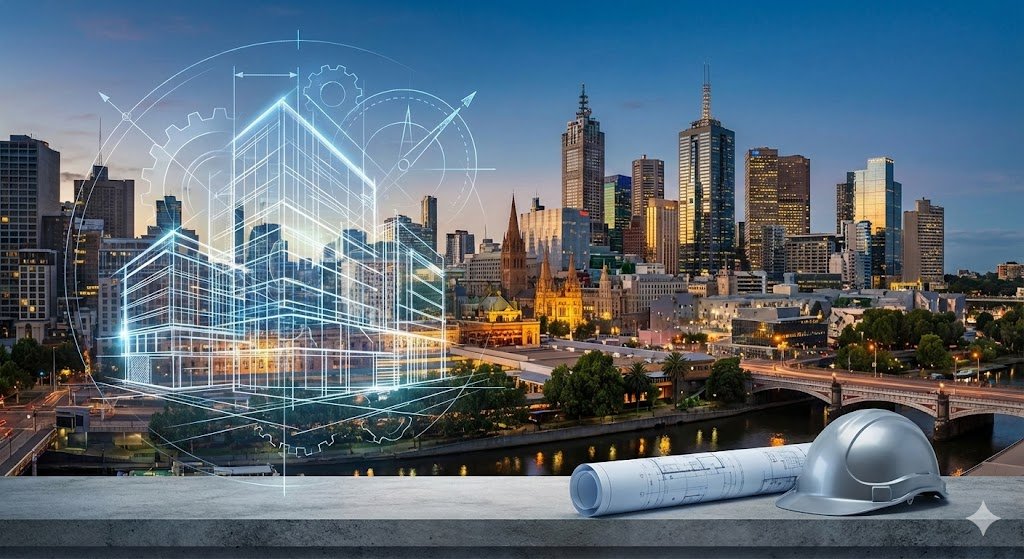
The Blueprint for Resilience Navigating the Complexities of Australia’s Built Environment
The Australian skyline is more than just a collection of steel, glass, and concrete; it is a living narrative of the nation’s ambition, economic resilience, and architectural prowess. From the heritage-lined streets of Melbourne’s inner suburbs to the expansive growth corridors transforming regional Victoria and New South Wales, the physical fabric of our country is in a constant state of evolution. However, the path from an architectural vision to a tangible, functioning structure is rarely a straight line. It is a journey fraught with logistical hurdles, regulatory labyrinths, and economic fluctuations.
In today’s high-stakes development climate, the difference between a project that defines a skyline and one that falters in the planning stages often comes down to the quality of its management. As we look toward a future defined by rapid urbanization and the need for sustainable infrastructure, the industry must pivot from traditional oversight methods to more integrated, strategic approaches. This shift is not merely about keeping a project on time; it is about ensuring that every brick laid contributes to the long-term value of the asset and the community it serves.
The Metamorphosis of the Australian Construction Landscape
The construction industry in Australia is currently undergoing a metamorphosis of unprecedented scale. We are moving beyond the simple expansion of suburbs into a more complex era of urban renewal and strategic densification. Major metropolitan centers like Sydney, Melbourne, and Brisbane are seeing a surge in mixed-use developments that blend residential living with commercial utility, creating self-sustaining micro-communities.
This shift brings with it a unique set of challenges. Developing in dense urban environments requires a surgical approach to construction. Site access is often restricted, neighboring properties must be protected, and the tolerance for disruption among the local community is low. Furthermore, the infrastructure connecting these hubs—the “arteries” of our economic body—requires massive investment and precise coordination. Whether it is rail loops, highway upgrades, or port expansions, these megaprojects serve as the backbone of the national economy, driving employment and innovation.
However, the sheer scale of these projects introduces significant risk. Supply chains are more globalized and thus more volatile than ever before. A disruption in a factory across the ocean can delay a project in Perth by months. Fluctuating material costs, labor shortages, and shifting government regulations add layers of unpredictability that can derail even the most well-funded ventures. In this environment, relying on hope or basic project tracking is insufficient. Developers and stakeholders require a partner who can see around corners, predicting potential pitfalls before they become critical issues.
Bridging the Gap Between Vision and Reality
Every great building starts with a vision—a sketch on a napkin, a render on a screen, or a dream of what a space could become. Yet, the translation of that vision into reality is a technical and managerial feat. Architects provide the aesthetic and functional blueprint, and builders provide the manpower and machinery, but there is often a “missing link” that ensures these two forces align perfectly with the client’s financial and temporal goals.
This is where the strategic value of high-level management comes into play. It acts as the glue that holds the disparate elements of a project together. Effective management is about orchestrating a symphony of subcontractors, engineers, planners, and regulatory bodies. It involves constant communication and the translation of technical jargon into actionable business intelligence for the client.
One of the primary failures in modern construction is the “silo” effect, where architects, engineers, and builders work in isolation, leading to clashes on site. For instance, a structural design might conflict with the mechanical requirements, a realization that often comes too late, leading to costly variation orders and delays. A holistic management approach breaks down these silos. By integrating teams early in the planning phase, potential clashes can be resolved on paper rather than on the construction site, saving millions of dollars and months of time.
This level of cohesion is difficult to achieve without an independent party dedicated solely to the project’s success. This is why many developers are now turning to expert construction consultancy to act as their representative on the ground. These professionals provide an objective voice, unburdened by the conflicting incentives that might affect a builder or a designer, ensuring that every decision made serves the ultimate goal of the project.
The Imperative of Risk Management in a Volatile Market
If there is one word that keeps developers awake at night, it is “risk.” The Australian construction sector is notoriously cyclical, and we are currently navigating a period of heightened volatility. Rising inflation has driven up the cost of raw materials—steel, timber, and concrete are significantly more expensive than they were just a few years ago. Additionally, the labor market is tight, with skilled tradespeople in high demand across the country.
Financial risk is only one piece of the puzzle. Regulatory risk is equally potent. Australia has some of the strictest building codes and safety standards in the world, and rightly so. However, navigating the approvals process with local councils and state governments can be a bureaucratic nightmare. A misunderstanding of a zoning law or a failure to adequately address environmental concerns can leave a project languishing in “planning purgatory” for years.
Effective risk management is not reactive; it is proactive. It involves rigorous feasibility studies conducted long before a shovel hits the ground. It requires stress-testing the budget against various economic scenarios. What if interest rates rise by another 0.5%? What if the cost of steel jumps by 10%? A robust management strategy has answers to these questions and contingency plans in place.
Furthermore, contractual risk must be managed with precision. The contracts that bind clients, builders, and suppliers are complex legal documents. A poorly drafted contract can leave a developer exposed to unlimited liability if things go wrong. Professional oversight ensures that contracts are fair, robust, and clearly define the scope of work and responsibilities, protecting the client’s interests at every turn.
Sustainability: The New Standard for Built Environments
We are no longer building just for today; we are building for a climate-conscious future. Sustainability has moved from a “nice-to-have” marketing buzzword to a non-negotiable requirement for investors, tenants, and regulators. The modern tenant, whether a corporate entity or a residential family, demands energy efficiency, low carbon footprints, and healthy indoor environments.
Integrating sustainability into a project adds another layer of complexity. It involves navigating green star ratings, sourcing sustainable materials, and implementing energy-efficient technologies like solar integration, greywater recycling, and passive thermal design. These elements must be baked into the project from the concept phase; retrofitting them later is often prohibitively expensive or technically impossible.
Navigating the green building landscape requires deep technical knowledge. It involves balancing the upfront cost of sustainable technologies with the long-term operational savings they provide. For example, high-performance glazing might be expensive to install, but it can drastically reduce HVAC costs over the building’s lifespan. An expert construction consultancy can model these lifecycle costs, providing clients with the data they need to make informed investment decisions that boost the asset’s value and marketability.
Moreover, resilience is a key component of sustainability. As extreme weather events become more frequent in Australia—from floods in Queensland to heatwaves in Victoria—our built environment must be designed to withstand these shocks. This requires a forward-thinking approach to engineering and materials selection, ensuring that assets remain insurable and operational for decades to come.
The Strategic Role of Superintendent Services
Within the ecosystem of construction management, the role of the Superintendent is often misunderstood but vital. The Superintendent acts as an administrator of the construction contract, a certifier of payments, and an adjudicator of disputes. They stand between the principal (the client) and the contractor, ensuring that both parties fulfill their obligations.
In the complex legal environment of Australian construction, having a knowledgeable Superintendent is a critical safeguard. They ensure that the quality of work meets the specified standards before payments are released. They assess claims for extensions of time, determining whether a delay was truly due to inclement weather or if it was a result of contractor inefficiency.
Without firm, professional administration, projects can easily spiral out of control. Scope creep—where the requirements of the project slowly expand without a corresponding increase in budget or time—is a common killer of profit margins. A diligent Superintendent controls the scope, ensuring that any variations are necessary, priced correctly, and approved before work proceeds. This disciplined approach preserves the financial integrity of the project and prevents the disputes that often lead to costly litigation.
Optimizing Project Delivery Through Technology
The construction industry has historically been slow to adopt digital innovation, often relying on paper plans and manual spreadsheets. However, this is rapidly changing. The integration of Building Information Modelling (BIM), drone surveying, and cloud-based project management software is revolutionizing how we build.
BIM, in particular, is a game-changer. It allows for the creation of a “digital twin” of the building before physical construction begins. This 3D model contains all the data regarding structure, mechanical systems, and finishes. It allows managers to visualize the entire construction sequence, identifying logistical bottlenecks and safety hazards in a virtual environment.
Using these technologies effectively requires specialized skills. It is not enough to simply buy the software; one must know how to interpret the data to drive decision-making. Professional management teams leverage these tools to provide clients with real-time transparency. Instead of waiting for a monthly report, clients can see the progress of their asset, track budget expenditure, and view site photos through a digital dashboard. This transparency builds trust and allows for faster, more agile decision-making.
Why Experience is the Most Valuable Asset
In an industry defined by tangible materials, it is easy to undervalue the intangible asset of experience. However, when a crisis hits a construction site—be it a structural failure, a safety incident, or a sudden insolvency of a major subcontractor—experience is the only thing that matters.
Seasoned professionals have seen the cycles of the Australian market before. They know how to negotiate with unions, how to expedite approvals with council planners, and how to value-engineer a design without compromising its architectural integrity. They bring a network of trusted suppliers and contractors, reducing the risk of engaging with unreliable operators.
This depth of experience is particularly crucial in the niche of “distressed” projects. Sometimes, despite best intentions, projects stall. Developers run out of funds, builders go under, or legal disputes halt progress. Rescuing a distressed project requires a unique set of skills: forensic accounting to understand where the money went, technical auditing to assess the quality of work done so far, and strategic negotiation to get the project moving again. This is a scenario where the intervention of an expert construction consultancy can literally save a development from total financial ruin, turning a potential write-off into a completed, revenue-generating asset.
The Future of Australian Infrastructure
Looking ahead, the pipeline of work in Australia is robust but challenging. The government’s commitment to renewable energy infrastructure, social housing, and transport networks guarantees a busy decade for the sector. However, the capacity of the industry to deliver these projects is stretched.
To succeed in this environment, developers and government bodies must prioritize efficiency. The “lowest bid” mentality, which prioritizes the cheapest upfront price, is proving to be a false economy. Low bids often lead to corner-cutting, variations, and adversarial relationships. There is a growing recognition that value for money is better achieved through collaborative contracting models and professional management that focuses on outcomes rather than just inputs.
We are also seeing a shift towards modular and prefabricated construction. By building components in a controlled factory environment and assembling them on-site, we can reduce waste, improve quality, and speed up construction times. However, this methodology requires a completely different logistical approach to traditional building, necessitating management teams that are adaptable and versed in modern methods of construction (MMC).
Conclusion: The Architecture of Success
The journey from a blueprint to a ribbon-cutting ceremony is complex, demanding, and fraught with risk. In the dynamic landscape of the Australian built environment, passion and capital are necessary, but they are not sufficient. Success requires the steady hand of strategic management.
It requires a partner who understands the nuances of local regulations, the volatility of global supply chains, and the technical demands of modern engineering. It requires a commitment to sustainability and a rigorous approach to quality control. Whether you are delivering a boutique residential complex in Melbourne or a large-scale infrastructure project in regional Australia, the quality of your oversight will define the quality of your outcome.
Investing in professional guidance is not an added cost; it is an insurance policy for your vision. It ensures that the skyline we build today stands resilient for the generations of tomorrow. As the industry evolves, those who leverage expert construction consultancy will be the ones who not only survive the complexities of the market but thrive within them, setting new benchmarks for excellence in the Australian construction industry.